Monday, 23 November 2015

#Michaela - Debating Education (21/11/15)


Another Saturday, another education event... Am I an edu-geek or an edu-loser? Regardless, it was a chance to meet up with my 'edu-Twitter/blogger friends' and share a day of discussion, debate, reflection, beer and curry. 

The day was held at Michaela, a free school that divides the edu-Twitter world (Read about David Didau's visit <here>). It is a shining example of how schools could be or has Katharine Birbalsingh and her neo-trad collection of Teach First-ers got education totally wrong? Perhaps, thankfully, that wasn't on the days agenda. 

Due to a prior engagement (baptism preparation for my son Tommy' forthcoming initiation into all things Catholic), I could only make 3 of the 5 debates, but the trip to Wembley was still well worth it. We were polled in advance, presumably so Bodil (the data cruncher) could see if we changed our minds. The key questions that were to be discussed were:

1. Was Michael Gove a great Education Secretary?
2. Should Ofsted be abolished?
3. Is Sir Ken right? Does traditional education kill creativity?
4. Does mixed ability work?
5. Should character be in the curriculum?


For me, yes / no answers were tricky:
1. Not great, but had a good vision, just maybe poor execution.
2. Only if it is replaced by a better regulatory body.
3. Not really, as I don't agree with his definition of creativity.
4. Maybe in some subjects, but not all?
5. It has to be, but not in separate lessons.

I think I went with:
1. No
2. No
3. No
4. Yes
5. Yes

My final thoughts were:
1. Still not great, but Jonny had done a fine job of selling him as such. Would I go back to pre-2010 education? No. Did Gove drive up standards and expectations, especially for the poor? I think so.
2. OFSTED is not fit for purpose; it may need a new name, aims and form to have any kind of impact. However. I also don't really trust teachers or schools to be self accountable.
5. If I need character lessons, I am not carrying out my pastoral responsibility properly in the everyday interactions with my students. 

Takeaways
Did I bring anything practical back to my class room for Monday? No. Did I change my mind about any topics? Not really. Do I think the day was useful? Absolutely. So many seeds were sown. The conversations, interactions (both face to face and via Twitter), questions and reflections are still settling. I want to read more about Hirsch and his effect on Gove, I want to consider my contributions to character education as a head of year, I want to consider further the accountability within schools. This was NOT a TeachMeet with a whole series of shiny ideas to magpie (and don't get me wrong, I love those). This was not a panel debate with 5 minute soundbites. This was something a great. A space, and a time to think about some of the most important issues in education.

Big thanks to Katherine for hosting us. Huge gratitude to the speakers for giving up their time and leading us in a really excellent series of debates. Thanks for Bodil for awarding my chocolates. And of course to Andrew for organising the curry - thank goodness Moore Spice delivered! 

Other Blogs

Saturday, 7 November 2015

Catholic Schools & Islam at GCSE


Schools Week (6/11/15) covered a story on P4 of this week's paper by Sophie Scott. It's worth reading it in full in the print edition (a seemingly edited version appears <here>), before reading the rest of my blog which addresses some of the information in the article. At the heart of the article, was a decision by the Catholic Bishops of England and Wales to collectively decide Catholic schools should study Judaism as their second religion at GCSE.


On a personal level, I found the tone somewhat inflammatory, but as a practising Catholic, I am used to dealing with criticism of the Church and in particular Catholic schools and education. I absolutely understand some of the issues that people have with the Church and Catholic schools. Yet I am also reminded of the quote by Archbishop Fulton Sheen, "There are not one hundred people in the United States who hate The Catholic Church, but there are millions who hate what they wrongly perceive the Catholic Church to be.”


As such, it is best in such circumstances to focus on the facts:
  • The letter came from the Bishops and was their decision. It was simply communicated by the CES, as is their role; the article does not make this clear. The CES offered advice to the Bishops, but they make their own decisions (Perhaps worth noting that some CES staff worked on the AQA GCSE spec which included options to teach both Islam and Judaism). The CES has certainly not "decreed" or ordered anything. In any Diocese, it is the individual Bishop's responsibility to make his own decision; many go with the decision of the collective conference.
  • The article begins "Catholic schools will no longer teach Islam as part of GCSE RS". It is worth noting that many did not anyway. The majority of schools teach Catholic Christianity. Any that did teach Catholic Christianity and Islam previously would have done so without formal permission of Bishop's Conference BUT presumably with their own Bishop's knowledge and approval (through Diocese / Section 48 inspection). It is possible that if the Bishop allowed it previously, he will do so again.
  • The article says each religion must be "equally weighted". This is absolutely not the requirement of the new GCSE; it requires a minimum of 25% coverage of a second religion. Some specs will provide a 50:50 split, but this is a choice not a requirement.
  • The article says, "regardless of whether they are trained to teach other religions, such as Islam.". I don't know of many RE teachers that are trained so specifically for teaching Islam in any schools, let alone Catholic schools? Teachers in Catholic schools are employed primarily to teach Catholic Christianity; that is their job. It would be reasonable to expect their training and expertise would be in this. Their expertise in other faiths is, however, also vital and would be used as KS3, possibly KS5 (in general RE type lessons) and equally still at GCSE! This is a misleading comment.
  • It is claimed by an anonymous Catholic RE teacher that this decision was made for "purely academic reasons", as if this is a bad thing. What other reasons would there be? A desire to fit the Community Cohesion agenda? To "fight terrorism"? These responsibilities do not belong to RE alone; they are whole school issues, just like SMSC. Surely RE, particularly in the Catholic school, should be an academic subject? It should have its own integrity and its own measures of success irrespective of the context and "current climate". Do other academic subjects "sway with the times"?
  • The choice of studying Islam in Catholic schools previously was not one based on academic rigour, not to help Promote Cohesion arguably.  Schools more likely picked it as they thought they would get higher grades with their particular intake. Is this a reason to be defended and upheld? 
  • Catholic schools do, and will continue to teach Islam; the article implies this is not the case. It will feature in Key Stage 1 to 3, as it always has done.
  • What has a primary school with 90% Muslim pupils got to do with GCSE RS? These pupils will learn about Islam alongside Catholic Christianity just like all pupils in Catholic primary schools.
  • It is not true that pupils in Catholic schools "must be religious" (this 'fact' features in the print edition - no longer online?). This is only the case in over-subscription, and even then, the parents of a student with a statement of SEND could request, and be granted, a place in a Catholic school (as well as other situations such as LA students etc). This reinforces the idea of proselytising and forced religion in Catholic schools; something which I absolutely do not believe to be true.
  • The anonymous teacher claimed "all lesson material would need to be rewritten". I cannot see why this would be the case? The majority of the GCSE remains Catholic Christianty, as has been taught previously. Indeed much lesson material will need reworking, but this is due to the more rigorous GCSE course rather than the inclusion or exclusion of Islam. 
This is my personal response to the article, and the inaccuracies within it. I feel that schools with a religious character and those without should be trying to work closer together, reducing the 'them vs us' mentality, especially within RE. There is common ground. However articles such as this are not helpful. The story could have been reported very differently, and more accurately, but that wouldn't have been as exciting as an 'exclusive' for Schools Week. 

NOTE - Since publishing this, Schools Week editor Laura McInery has been in touch to let me know the online version is a corrected version. She also let me know the CES have been given the opportunity to write their own article for next week. Thanks to Laura for this, a sign of good journalism for me! However my concerns remain that often the media, in general, are very quick to report inaccuracies about Catholic education.

Image courtesy of The Telegraph

Friday, 23 October 2015

RE in 2020? Why we MUST get change right.


There is a great feeling for change within RE. Many want to look at systems put in place in 1944, including legal provision for RE, and want to do things differently. Some suggest that time is now. How do we get it right? 

Here I write a possible (post-apocalyptic?) scenario for RE, if we get things wrong. It is why we MUST get things right. We must have consensus about our purpose. We must not rush. We must consider the vested interests of the RE world and work out how we are going to mange them. This could be RE in 2020...

There was great celebration when we changed the law and got rid of compulsory RE in 2017. We all thought thought there was an opportunity to get RE on a par with other humanities subjects. There was hope for inclusion in the EBacc (which quietly continues in the background) and therefore a better status in Progress 8.

As the National Curriculum is now all but obsolete, with free schools and academies not following it anyway, there was no point campaigning for RE to be part of such a framework. Only 10% of schools are now under LEA control. 

Locally Agreed Syllabus' have been abolished as the government realised it was paying for every local area to "reinvent the wheel". This has lead to SACREs all but disappearing. Schools volunteers do exist in some areas; these are people willing to go in to help teachers. These are often connected to Local Groups supported by NATRE, or regional Hubs supported by CstG.

A collaboration of RE organisations tried to put together a 'Core Curriculum' for KS3 RE, however before they had finished their document, a company that includes a GCSE Awarding Organisation and a resource publishing business, produced "GCSE READY" a syllabus that effectively helps schools deliver a 5 year GCSE. It was produced by curriculum experts using the DfE Annexe produced in 2015 for the GCSE.

As a result many schools continue to offer just one hour a week to RE. Many RE teachers don't like the 5 year syllabus, but there are few other options. Due to a strong advertising campaign, many head teachers saw this as the 'best solution' for continued RE.

It is hard to work out which schools are actually teaching RE as many have created a new subject which has any one of about 30 different names which often includes the words 'moral' or 'ethics'. In these lessons, teachers are aiming to fulfil all kinds of legal and non-statutory requirements such as Citizenship, PHSE, British Values, SMSC and Community Cohesion.

RE has not featured in any OFSTED report since their significant reforms in 2017. This reflected the legal change in RE. 

Collective Worship is now technically separate from the teaching of RE and does not have to be distinctly Christian, however many RE teacher continue with this responsibility for assemblies as it has already been historically so. Senior Leaders have not stepped in to take this away from RE teachers. The 'new subject' which RE teachers find themselves teaching continues to lend itself to these assemblies, perhaps more so now than ever before.

RE teachers are still in short supply and recruitment is at an all time low. This is because there is still a confused purpose and an 'RE teacher' job may involve teaching more of the subjects mentioned above than RE. This does not appeal to Theology or Religious Studies graduates. Strong RE departments work hard to convince former students to return and teach RE. 

Budget cuts to schools have hit RE hard. Most schools will not pay for INSET nor resources. This has lead to most RE advisors becoming redundant, while companies and organisations that offer events and training have been forced to close or only offer free events or things teachers will pay for our of their own pocket. Publishers are not as interested in RE and so choice is far more limited now. Many resources tend to be teacher created and shared via places such as the Save RE GoogleDrive; quality varies hugely.

GCSE numbers are naturally down. Some people have said this doesn't matter as only students who really want to do it are picking it as an option. However, it is clear that there is great disparity among schools; good RE departments have high numbers, while others have no entries. RE has no consistency across schools, for some students it is non-existent, for others, poor or confusing. 

Faith schools continue to deliver their own RE syllabuses. Under continued attack from organisations such as the BHA, faith schools lead an active campaign to refuse the law change. They believed any concession given would be seen as a victory for the anti-faith school campaign and would lead to further attack and forced concessions. Faith schools still have high GCSE entries, better department budgets and resources. Sadly there is greater divide than ever between faith schools and other schools when it comes to RE. However there are reports that faith schools are using elements of "GCSE READY" in KS3 to help prepare their students for KS4.

Due to continued confusion over purpose and aims, the perception of the subject has not improved for students or parents, or indeed senior leaders. Within RE organisations and among RE teachers, there continues to be great division. These disagreements remain irreconcilable. The 'something else' of RE remains undefined and discussions about 'spirituality' have not reached any conclusions. Views on pedagogy and the delivery of RE are the biggest issue. A form of confessional RE continues in some non-faith schools; personal agendas and views still pervade in some classrooms. 

Non-religious world views and humanism now feature in many RE lessons. However, often they are not taught well as there is confusion about how they fit alongside the teaching of religion. Some resources do exist but even among non-religious people there is much disagreement. 

The right to withdraw no longer exists. If a school chooses to teach a distinct RE at Key Stage 3, all students must follow that curriculum. Only in schools with a religious denomination is RE compulsory beyond Key Stage 3.

Due to "GCSE READY", assessment at KS3 is much better. They have produced a flexible assessment model that can be adapted to school systems. The knowledge and skills are directly linked to the GCSE.

Primary RE continues to suffer. Due to it no longer being compulsory, many schools now use the time in KS2 for further SATs preparation. Many schools do not have a teacher responsible for RE. As in secondary, any religion or RE is often packaged alongside Citizenship, PHSE, British Values , SMSC and Community Cohesion. 

  • Is this the world of RE we want? 
  • How can we ensure that the negative aspects of this scenario don't happen? 
  • What are our priorities? 
  • What do we need to change first? 
  • What is realistically achievable? 
  • If there isn't a climate for law change, how do we solve the issues?
  • Do we need multiple solutions to these problems? 
I began working on a table of 'problems' in RE, some solutions and working out their priority. This is purely for my own thinking, NOT as part of any group, team or collective thinking about RE.

Feel free to add to this document <here>

Image: The Playground Scene from Terminator 2


Wednesday, 30 September 2015

The Best Of What We Know...


At any moment in time, that should be our aim.

For too long in education we have accepted 'peddled quackery' and 'snake oil'. Teachers have been mis-sold pseudo-science by companies trying to make an easy buck or SLT looking for a 'silver bullet', found printed on a glossy leaflet.

Thank goodness for people like Dan Willingham, Tom Bennett and the ResearchEd crowd plus the collective power of blogs, Twitter and TeachMeets. We've started to get somewhere far closer to the best of what we know by working collectively and venturing into studies that previously had been ignored by those in education.

This knowledge of how children learn and remember needs to be at the fingertips of all teachers. Thankfully it now can be... A 10 page PDF (with just 6 pages that *really* matter) outlines the best of what we know concisely and in a practical way:


For those already aware of the world of cognitive psychology, there may not be much new here. However the practical explanations are incredibly useful. It also includes an extensive bibliography to take understanding to the next level.

Huge thank you goes to Deans for Impact for this. Some people would try and charge hundreds of pounds to 'sell' these ideas. Thankfully this is being shared freely to help us all become better teachers. It focuses on 6 key questions:

1. How do students understand new ideas?
2. How do students learn and retain new information?
3. How do students solve problems?
4. How does learning transfer to new situations?
5. What motivates students to learn?
6. What are some common misconceptions about how students think and learn?

They used an  brilliant analogy of Messi (Americans talking about soccer!), arguably the world's greatest footballer, when launching this publication:

Lionel Messi is generally considered to be the best professional soccer player in the world, capable of delivering deft passes and jaw-dropping strikes on goal at the highest level of international competition. But does he understand the physics of how soccer balls travel? Perhaps, but color me skeptical. My guess is he’s developed his skills in blissful ignorance of the underlying physical laws that control the movement of the ball.

Perhaps the same holds true for educators – perhaps teachers need not understand the science of learning to be effective. Perhaps teachers, like Lionel Messi, can acquire all the skills they need through deliberate practice without understanding the underlying theory of learning implicit in their actions.   <source>

I agree with David Didau (see <here>), this should be shared with every teacher in the UK. It should also be embedded in all routes of ITT. It should be a key part of CPD. It should not be dismissed as 'something we already do anyway' (do you? do you really?). We really need to share the best of what we know.

How about you starting with those that you know or work with?


Saturday, 19 September 2015

LAUNCH: The Relational Teacher


I was very fortunate to be invited to Rob Loe's launch of The Relational Teacher book and film at St Catherine's College, Cambridge on 17th September 2015. I've heard Rob speak at both SLT Camp and TeachMeet CSS, his enthusiasm for the project is infectious. 

The key note address was from Susan Pinker who was discussing her research featured in The Village Effect (see <here>). She discussed how face to face relationships make us feel happier, reduce stress… and help us live longer. 


She also discussed, with some excellent cartoons, why it is important to distinguish between face to face and digital relationships. Sometimes we confuse the two, or allow one to take the place of the other.

The study used for her book (35,000 people over 7 years) found that close close relationships and good social integration have the greatest effect (excluding genetics) in making you live longer - far more effective than exercise or clean air!

It was then time for the main event...

The Film

“Outstanding relationships between teachers and students correlate with their academic success”


RSA Fellow Rob Loe, The Relational Schools Project has spent the last two years working with schools to explore these issues, and has developed a robust database of evidence that clearly shows the vital importance of good relationships between teachers and the children they teach, in the achievement of great student outcomes.

This is, of course, something that all good teachers know instinctively. But by applying the Relational Proximity framework[1] developed by Relational Analytics to their analysis of classroom interactions, Rob and his team have been able to assess the quality of relationships in schools and, in many cases, correlate these directly to student outcomes.

The findings will warm the cockles of anyone who understands the true importance of teaching. <Source>


The first half of the film was enjoyable watching, with some heartwarming discussion about the importance of relationships in schools. However, it was the second half which prompted the real thinking for me:
  • The female PE teacher who was questioned on her Y9 class relationship was a fascinating insight into how we can sometimes totally misjudge our relationships in school. As some of the students were in her form, and many attended extra curricular clubs, she felt there were lots of positive relationships. However using the proximity framework, there was a correlating pattern, but the gap between the two perceptions was significant. When discussing the relationships with the students, they were very divided on their view of the teacher. In fact, she had misjudged the relationships overall, because of the relationships with some of the students in the group. 
  • I think this is a quite common mistake. Our view of particular teaching groups can often be swayed by one or two challenging students, or a small core group of excellent students. The effects of this, on a potentially significant number within the group, can be disaffected by the teacher and the lesson.
  • The male science teacher modeled really positive relationships with his class; it was clear he was very popular with his students. When questioning his students, it was at first hard to get beyond 'he's funny'. However Rob later looked at the attainment data from his classes and there was direct correlation between the positive relationships and over achievement - simply put, better relationships lead to better outcomes.
  • This is clearly something we could have guessed, but the data seemed to suggest that this link was measurable and significant. It would be hard for teachers to replicate the teaching style of the lesson, there was a lot of 'personality' in it. Yet, it is a clear reminder of how vital relationships are. Perhaps even more so for students with low aspirations or who are deemed less able.
Q&A


Rob pointed out that relationships in school need not be different from relationships in the wider world, and particularly the family. For example, who has a competition for ‘most motivated member of the family’? Or reads motivational quotes over breakfast in the kitchen? Do we therefore need these in school?

It was also pointed out that students discuss teachers a lot. They frequently try to identify what makes a good teacher and what makes a bad teacher. Treating people fairly comes up a lot.

Where do we go next? This is the really tough question for Rob and his team. They will now continue to build data to back up the value of relationships and it seems they are willing to work with schools to help them improve this. Their over arching view seems to be that we live in a fragmented society, but with more cohesive schools, we will end up with a more cohesive and stronger society. This is better for everyone.

Post-Film Social & Conclusions

As always, some the best discussions happen with a glass of wine towards the end of the evening. I was discussing and reflecting on my own position:
  • As Head of Year, I frequently find myself in the role of 'bridge builder' (see blog <here> ). I am now far better at helping staff restore relationships for themselves. If I intervene, the common result is my relationship with the student improving - even if I have simply backed up a colleague, told them off and put them in detention. Rob recalled a teacher featured in the film discuss how as HoY and having certain characters frequently in detention, strong relationships were developed. The time spent, and conversations had, even if largely about the behaviour incidents, helped form strong relationships. It's also why I now spend a lot of time, 'just checking in' with certain characters in my Y11 cohort. When they do break the rules, it can be easier to remedy.
  • A few people commented on how it was very refrshing that there was no mention of Progress 8 or OFSTED. However some did ask, should Lucy Powell be sent a copy? Would, could, should this be a key part of a Labour education policy?
I came away with a copy of the film and book, but there was a personal 'where next?' too. Could I recommend for whole staff CPD? I fear there would be a significant number who would dismiss the film as too obvious and a waste of time in a school like ours where many relationships are good. Could we overcome this to focus on what I feel are the existing key findings from this study? Could we help staff to improve relationships? Should this be part of the new staff induction? For trainees?

I look forward to reading the book as well as keeping up with the developments of the project. Thank you Rob and team for a great evening.

Buy the book and film <here>
Read more <here>

Tuesday, 8 September 2015

Pontifex: An Etended Metaphor


Before I decided upon this metaphor for my first year of pastoral leadership, I needed to check with a priest (and canon lawyer) that it was acceptable. After all, Pope Francis uses Pontifex as his Twitter handle and one of his many titles is Pontifex Maximus. Given this is written in the light of my MA in Catholic School Leadership, excommunication for heresy was not my intention! However for Catholics and non-Catholics alike, I feel Pope Francis does give an excellent example of leadership: servant-like, love-filled and compassionately just. I have written about my first term of pastoral leadership previously, see <here>.

Pontifex: “Bridge Builder”

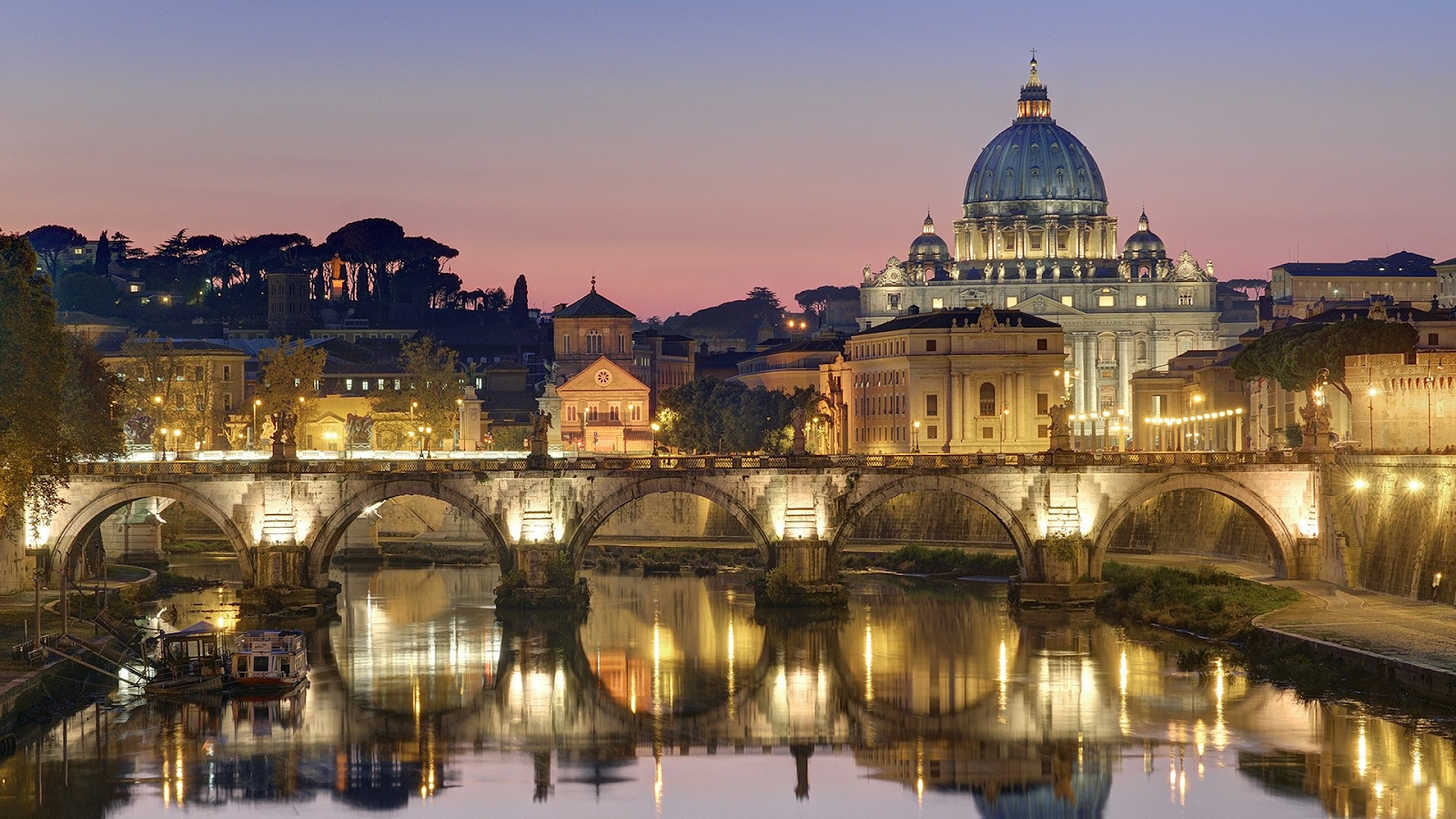
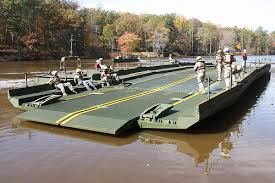
Pontifex Maximus is a title of the Pope which means ‘greatest bridge builder’. This was originally the most important position in early Rome, but was later adopted by the Church based there. In a city divided by a river, it was naturally a very important role.

Less “Bridge of Angels”

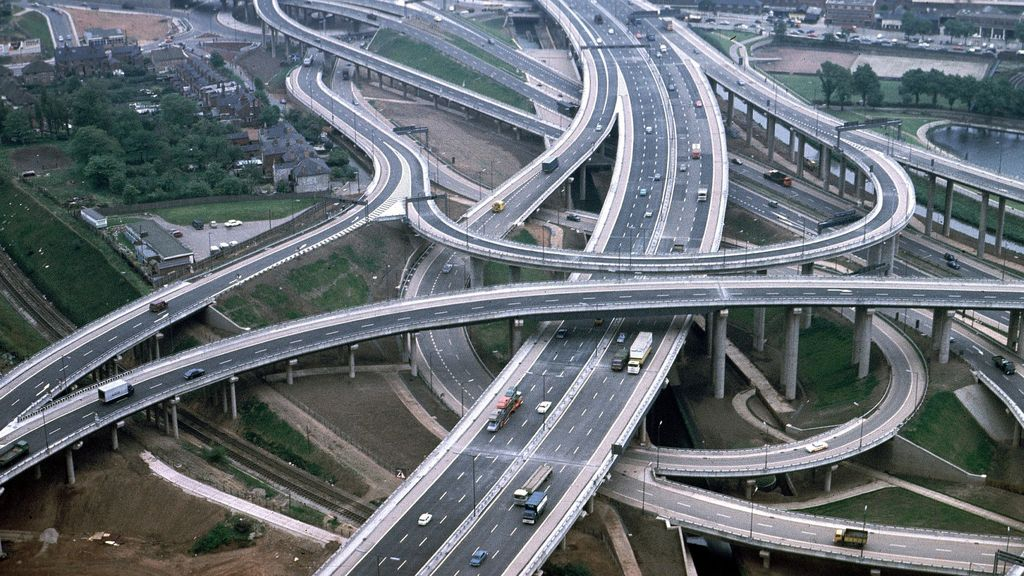
More “Spaghetti Junction”


However it has been less Bridge of Angels and more Spaghetti Junction this last academic year as I dealt with self harm, eating disorders, bereavement, illness, stress, anxiety, school refusers, marriage breakup... and just ordinary teenagers. Expect the unexpected is a good mantra generally for those working in schools, even more so a Head of Year.

For the first time, I have had to work directly with with social services, hospital consultants, the police, CAMHS, the EWO, counselors, home-school support workers, parishes... as well as the parents and carers.

Building The Bridge 


The step from form tutor to pastoral leader such as Head of Year is enormous. The scale and extent is such that a handover is near on impossible.

Jill Berry introduced me to Robert Quinn’s idea that you: "Build the bridge as you walk on it",

This suggests that we are always learning and honing our skills in education and that we may never be ready for the next step of leadership if we wait until we consider ourselves fully trained and prepared.

Is it possible to be train up as pastoral leader? I think one of the most important things is to simply have the determination to succeed, and working out how to invest sufficient time and energy (something, somewhere needs to give at times - working out what that is can be one of the toughest challenges).

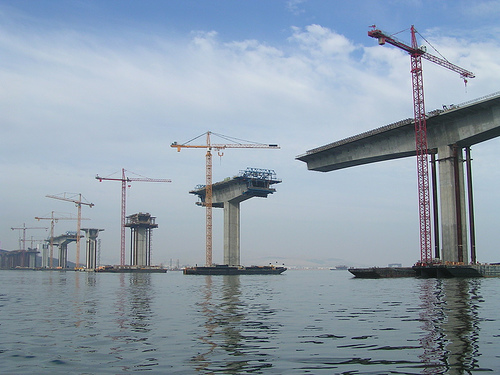
Brooklyn Bridge (New York, USA)

It took just over 13 years (1870-83) from start of construction until opening, or 18 years (1865-83), from the drawing-board to opening. The bridge cost $15.5 million in 1883 dollars (about $379,661,000 in today's dollars)

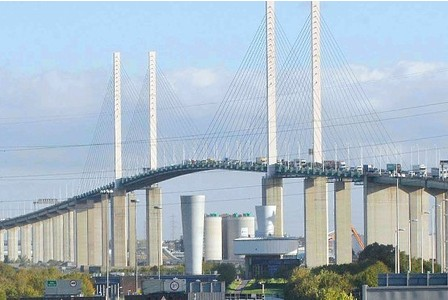
The QEII Bridge (Dartford, UK)

It took just over 3 years to build from 1988 to 1991 at a cost of £120m (£244 million as of 2015).

Building bridges is not quick, nor cheap.

How much time do we give our pastoral leaders? Are non-teaching pastoral leaders the way forward? Or is it better to have someone who is also involved in the pressures of classroom teaching?

How much money do we pay them? Does the money recognise the responsibility, pressure and accountability? In many schools it is far less that academic leaders such as Heads of Department. That gives an interesting message about priorities.

Emergency Bridge Building


I don’t like using military language in reference to schools, but nevertheless, sometimes as leaders, both SLT and Pastoral Leaders are called in during an emergency. Plus you often need to act like UN Peacekeepers.

Emergency bridge building is a difficult task. Particularly when one side is not willing or ready. They are difficult conditions in which to rebuild your bridge, but sometimes it is necessary. Emergency bridge building, or rebuilding, is a special skill, that requires particular expertise.

Building Together


Everyone in school is actually a pastoral leader. Everyone has a responsibility for safeguarding. Most teachers have a form. They certainly see students in distress; in the corridor, in the playground, in the classroom.

Many love being a Form Tutor. Some see it as an inconvenience. Are they then the ones confused why a student hasn’t done their homework, or is missing lots of lesson for no apparent reason?

It is everyone’s responsibility.

Reams of data, the latest pedagogy, 1:1 iPads, the 'all singing and dancing lesson' are of no use unless someone is ensuring the students in the room are safe, happy and secure.

However also remembering, Jill Berry’s question at TMLondon, “Who would want to be lead by you?” - as a Pastoral Leader are you ready to get your hands dirty and do registers, detentions, admin like everyone else?

Pastoral Leaders are “the oil in the machine” (John Dexter)


Why do your best planned lessons go wrong? It's normally, nothing to do with you or your lesson.

What time, space, status and reward do we give pastoral leaders?

If there is not enough 'oil in the machine', the whole school is in trouble.

Senior leaders, please consider the support that you offer to the pastoral challenges in your school, do you even know what they are?

Why be a Bridge Builder?


In 10 years of teaching, I have never been busier, nor could I ever imagine having so little time to myself. I didn’t even realise some of the things that go on with some of our students. It can be absolutely heart breaking yet equally amazing that they arrive in school and learn anything!

However I am really enjoying the job, and I find it incredibly satisfying.

One thing you need to learn very quickly is that you will never please everyone… some will think you are too hard, and others not hard enough on the students!

Consider it, or make sure you are the people supporting it.


Download the original presentation <here>

Monday, 7 September 2015

Why can't we talk about intelligence and genetics? (#rED15)


At ResearchEd 2014, I stumbled into Andrew Sabisky's talk on IQ. It wasn't my intention to go to it, but whatever I had picked was full and I made this my wildcard. This is great advice for all future ResearchEd conferences, "Don't panic. Go to wildcards."


I found his presentation fascinating (see <here>), and I remember thinking to myself that I couldn't recall anyone during my training, or nine years of teaching, really discussing the idea of intelligence, IQ or 'general mental ability factor' - even less so, it's effect on classroom practice and educational systems. Genetics was another feature of his talk, and again something which remains a taboo in most educational training and debate.

Since then, I've spoken to Andrew a few times about intelligence and his research which has lead to my interest in the topic growing. However, and not by Andrew, I have been warned on numerous occasions by several people... DO NOT DISCUSS INTELLIGENCE OR GENETICS ON TWITTER or indeed with anyone you consider a friend in education; you will fall out. Or get labelled as a Nazi.

At ResearchEd 2015, I attended Stuart Ritchie's presentation on IQ (and why it is so controversial) and it has done nothing to stop my interest. Why don't we talk about intelligence? Why don't we let it effect decisions we make in the classroom or school? Should we better recognise genetic factors in schools?

It was an excellent talk, showing convincing, comprehensive studies over long periods, with lots of participants. He included lots of fascinating information, such as the fact that there are a greater number of boys at the high and low ends of the IQ spectrum, and people with big brains ARE cleverer. It's all in his book, which I have added to my 'to read' list (see <here>).

I must point out that I am no expert in any of this, and I am writing as an absolute 'lay-man' on the topic. Please correct me if and when I have got things wrong. This is also deliberately 'light' and accessible; I also appreciate these topics are like Pandora's Box, and many won't want to read any further.

It certainly seems that most psychologists believe that a general mental ability factor, or 'intelligence' exists which explains performance in cognitive testing. IQ tests are designed to approximately measure this. The resulting score is influenced by both genetic and environmental factors. These IQ scores are fairly good indicators of educational attainment, income, tendency towards crime, life expectancy and other socio-economic outcomes. I'm pretty sure someone told me that IQ tests are not perfect, but we are able to more accurately measure IQ than we can measure a person's height or weight.

In spite of all this, the mainstream media, and indeed many in education, particularly teachers, seem to suggest:
  • IQ scores have little meaning
  • Genes have no impact on IQ
  • Testing of IQ is so biased it is useless
  • Doing well at at IQ test is simply a measure of how good you are doing well at IQ tests (Named "Ritchie's Law" during his talk)
However, with even my limited reading about intelligence, this just doesn't seem to be the case. It IS a controversial topic, and it can be quite emotional (eugenics and the Nazis hasn't helped this). Some have suggested that in a modern, liberal society we do not like to think about people, let alone our students, as intrinsically unequal.

Yet as Dylan Williams suggests, the above views are just not backed up by scientific research. Instead science seems to suggest:
  • Intelligence is determined by both environment and genetics, and the genetic influence is substantial;
  • Intelligence tests correlate strongly with a range of other measurements of mental capability;
  • Intelligence is strongly associated with success in a wide range of real world activities;
  • There are several different aspects of intelligence, but most of them are strongly inter-related.  <Source>
Implications

If this is correct, maybe there should be better discussion about intelligence and genetics in schools.

Intelligence is not a limiting factor in education, but it needs to be recognised that some students will need to work harder to achieve the same goals as others. This is why some have suggested that grit, character and growth mindset are vital to develop and explicitly teach in schools. Will these counter some of the effects of intelligence and genetics? Does the lack of these qualities explain why some bright students do not succeed?

Are CATs scores useful in schools? Are they simply a tool for identifying the 'More Able' or 'Gifted and Talented', or just to get the Y7 sets "about right"? Could they be used as a better indicator of under achievement at GCSE than anything else we have? Do we have faith in our CATS scores? Should we?

Andrew's talk at Wellington Festival of Education (see <here>) suggested other ideas such that Pupil Premium money would be better allocated based on intelligence to really be most effective. He also noted that due to correlation of income to intelligence, it would be likely to include many of the same students, but it would nevertheless a better way to allocate funds. Is this as controversial as it first sounds? 

Intelligence adds an important dynamic and consideration to 'closing the gap' in education. If it was better recognised, and further discussed, would we have a greater chance to close the achievement gap (or is 'closing the gap' actually an impossible task?)? Schools do remain the biggest factor in increasing IQs, despite it's effect being somewhat less that what some people hope.

If it remains a taboo, shut down or awkwardly avoided, there is little chance we'll ever fully understand it's effects. It should not be the great unspoken in education. This is not helpful to schools, teachers or students.

If a 'bell curve' of intelligence exists (and it certainly seems to), we can reasonably hope to shift the whole thing, but not eradicate it. Michael Wilshaw was heavily criticised for suggesting that it was unacceptable that some children left school 'below average' (see <here>) because there will always be a distribution of intelligence - and that is not have averages work! Nicky Morgan again came under fire when discussing 'coasting' schools where she warned that an school without "an above-average proportion of students making acceptable progress" over a three period would be under DfE scrutiny (see Tom Sherrington <here>).

I think the message to students must remain:

We don't want you to fulfil your potential, we want you to exceed it. Regardless of intelligence or IQ score, we don't know what your upper limit is (in terms of GCSE/A-Level grades).

The message to teachers, schools and policy makers:

Let's talk more about this.

Schools Week report on the session <here>

Further Info (some of my reading used to write this)
  • David Didau on "Reading Ability": <here>
  • Andrew's podcast interview on "Genetics and Education": <here>
  • Andrew's presentation from ResearchEd 2014: "Nature and Nurture" <here>
  • Andrew's presentation from Wellington Festival of Education 2015: "Ability and Education": <here>
  • The neuroscience of human intelligence differences - <here>
  • Toby Young - "The Fall of the Meritocracy" - man is not a mould-able piece of clay <here>