Showing posts with label Leadership. Show all posts

Tuesday, 31 October 2017

Work-Life Balance & Email


What did schools do before email? I started teaching in 2006 and already email was widely used. I was familiar with that, as email had been a common form of communication at university. However, it was not used at all when I myself was a student at school (pre-2002). It is not uncommon for teachers to get 30 to 40 emails day, and when I was a head of year, 60 or 70 emails a day was entirely possible.

I remember when I started at my new school (September 2016), that there was a brief discussion in a meeting... "Remember no emails after 6pm, or at the weekend, SLT need to be leading on that.". I recall thinking, that sounds like a good idea, but not fully appreciating how much of a difference it makes.

Teaching is all consuming; you can work every hour in the day, and still not get everything done. Likewise, your email inbox is rarely completely empty. There is a great temptation to sit down in an evening and try and 'clear a few' - although even this acknowledges that it may be impossible to ever conquer. These might be your working hours, but they are not the same for everyone. Some teachers will get up early and be working from 5am, some will stay late in school, others will up until 2am. I'm not suggesting you should work at any of these times, but some people choose to, especially if they want to spend time with their partner or children. There is a certain flexibility with working hours.

One issue is the fact that many teachers have email set up on their phone. This can be hugely advantageous, especially during the working day. I know if I send something urgent to our SLT, someone will respond near on instantly. I can also clear a number of emails on the train to and from work. However, the problem is if you have notifications set up (I don't on my phone - only on my iPad), you will be constantly distracted. If there are no guidelines on when emails can be sent, this can then become part of your evening, weekend and even holidays.

I set up a few Twitter polls recently:


I find it incredibly worrying that 5% of respondents send email over the weekend and expect a response. Also that 56% send, but don't expect a response - but is there a consideration about how those receiving the email feel or react?

Can they really just ignore it? Do they feel they have to 'just quickly reply'? They may do this while they are out for dinner with their partner, sat in the park with their child, or enjoying a hobby with a friend? Regardless of policy, if emails are being sent, some people will feel they need to reply. Having now experienced no emails outside of reasonable working hours for well over a year, I think far more schools should 'ban' email from 6pm to 7am, weekends and school holidays if they are serious about staff well-being.

I followed this up after half term:


It is clear that emails slowed down... but didn't stop. Nearly a quarter of teachers were getting 11 or more emails over their week "off". There is obviously complexity behind this data - some emails don't need responding to, some are from students, some might be from mailing lists.

Since tweeting these out, I received a number of DMs from colleagues on Twitter. These are some of the examples of emails sent in schools:
  • Information requests for students sent out at 2am in the morning
  • Staff meeting agendas sent out at 10pm on a Saturday night
  • SLT requests for information send out at 9am on a Sunday morning
  • Department data requests sent out during the holidays
  • Deadlines of 24 hours on emails sent at 8pm on a Friday
This is on top of all the 'general information' and 'all staff' (when they don't need to be 'all staff'!) emails sent during the evenings and weekends. 

How can anyone justify this?

This has a huge detrimental effect on work life balance. Teachers can never switch off, and even if they don't have their email direct to their phone or iPad - if they know these emails are being sent - and it seems part of their school culture -  they feel they need to check. When and why did we become this kind of profession? Instant replies are wanted for things which really could wait...

This can have a huge affect on the stress and anxiety levels of staff; it can make them feel guilty or inadequate when they spend time with family, friends, or on holiday. It also seems to be a competitive 'who is working the hardest?' culture - a dangerous feature of modern teaching.  

There is another way.

Your working hours may be late at night, or at weekends. That's fine; there is an element of flexible working in teaching in this respect. I also think it is not enough for SLT to just say "well don't check it". Most staff want to do their job well; they want to be efficient.

Delay Delivery

My old school used to have email setup through Outlook; it was very easy to 'Delay Delivery'. I used to frequently do this and set up for 8am arrival in inboxes, as I knew many staff checked their email around this time before going off to briefing or to register their form.

Boomerang

For Gmail, this is the ideal solution. It is a simple  add in for Chrome that allows you to send delayed messages (it does have a limit). This also has another new great function of pausing your email while you work on something important - see below for more on this. There is also now a new Boomerang app for your phone, so you can simply write emails in this to send later - even if you don't use as your main email app. 

Other options

Write it, leave it in your Draft folder, and then send when you get in in the morning (after 7am!).

This is important.


I did some reading around email, well being and work life balance while writing this blog. The first shocking statistic is that can take 20 minutes on average to refocus after being disrupted by an email. If you are marking and hear a 'ping', it may take you a considerable length of time to get back to concentration level you had before. If that email is received outside of school and triggers stress or anxiety, then it's impact may last a lot longer than 20 minutes.

It has been proven to be far more efficient to 'cluster' tasks, and so setting aside 2 or 3 occasions during the day to check and respond to emails is a much better work habit. However, the nature of schools doesn't always work this way - but perhaps the trial of slightly better habits may work? It doesn't help when you are stopped in the corridor and someone says, "I've just sent you an email..." - if you send it by email, it can obviously be replied to later in the day when I am not trying to prepare to teach my next lesson, discipline this student, mark this book, or just make a cup of tea!

Would you write better / politer / more useful responses if you were sat at a PC with time dedicated to emails, rather than rushing between a Year 9 and a Year 11 lesson on your phone? You may also not need to send that 'all staff' email about a lost mug, the whereabouts of a child who missed your lunchtime detention or the jammed photocopier if you wait until later in the day - those issues may have all resolved themselves! 

Another key bit of research is that people, even those with busy working lives, who checked their emails less (regardless of volume of email), were less stressed. Flipping between tasks (teaching and email responding) makes you less efficient at both, and naturally more stressed doing both - this has got to be a concern. Teachers, or other staff, who bombard colleagues with emails during the day are potentially effecting their performance in the classroom.

Finally, an incredible statistic from the NY Times found 6% of workers (not teacher specifically), checked their work email while they, or their partner, was in labour! 

Actions
  • Don't email after 6pm, before 7am, at weekends or holidays - it can wait. Even if it is not school policy, you may produce a butterfly effect. If your working hours mean you catch up on emails during this time, use technology to delay it's arrival.
  • Try small changes to your email habits - turn off notifications on your device, close your email browser window when marking, deactivate during holidays, 'cluster' your time.
  • Consider the implications of your email on the recipient - you don't always know the interruption, stress, guilt or anxiety your 'quick email' may be having.
  • Always think before you hit send - Do I need to make it an 'all staff' email? Do I need to send that email at all? What happens if someone forwards this email on? Have I conveyed my tone? Have I used the CC correctly? 
  • Would it just be better if I went to see the person face to face instead? 


Further reading:
  • https://hbr.org/2014/07/the-cost-of-continuously-checking-email
  • https://www.nytimes.com/2015/01/11/opinion/sunday/stop-checking-email-so-often.html
  • http://www.sciencedirect.com/science/article/pii/S0747563214005810
  • https://www.teachertoolkit.co.uk/2012/10/10/ttkitthunks-pkainsworth/
  • https://www.teachertoolkit.co.uk/2015/11/19/emailprotocol/


Wednesday, 16 August 2017

Spinning Plates


When we see colleagues, perhaps via social media or from stories in the staff room, everything can seem to be great for them. They are uploading resources to TES, emailing people their newly written SoWs, offering to help moderate essays via email,... plus they have a few young kids, a partner, they still go on holiday, they knit, they volunteer at the weekend.  While you feel frazzled, unable to plan your next lesson or mark that set of Year 9 books.

Workload is the issue that won't go away, perhaps quite rightly so, it is not sorted.

As teachers, and leaders, we are plate spinners. However, we sometimes need to work out what plates we can afford to drop. This is perhaps the single most important question that all of us should be asking - if I don't do this, what will happen?

Some nuggets of information you don't forget, and David Cameron's quip at Northern Rocks 2015 has stayed with me - How do we sort our IKEA from our Wedgewood? Do you even have a clue which plates you can, and maybe even should, drop?

I began a new role in September 2016, as Assistant Headteacher / Director of RE - part of this was leading the RE department as subject leader. The first few weeks, as a new member of SLT, in a new school, and leading a big department (9 of us taught RE last year), was chaos. There was so many plates I was trying to spin. I was also looking around at some of the plates I was dropping from day one... 


One of the key jobs of leaders in schools is to be 'sh*t umbrella'. SLT need to umbrella, rather than funnel, things from external sources - DfE, Ofsted etc. Middle Leaders need to umbrella things from SLT. As a TLR holder you are expected to deal with certain things, working out what to ask you team to do, and what to shoulder yourself. Any leadership role in school requires expert plate spinning skills.

The DfE and Ofsted are always giving more and more plates to spin - as are the media (apparently they have cited 90+ new things that schools 'should be teaching' so far in 2017). Schools are often already working at capacity - so what gives? If SLT keep giving more plates to spin to their Middle Leaders and other staff, something will give at some point. 


So how do we preempt this? We need to ask honest, sometimes difficult, questions of ourselves, our polices and our expectations.

  • If you just stopped doing it:
    • Who would notice first? Students, colleagues, SLT, parents?  
    • Would they be concerned? For what reasons?
    • What would the consequences be? Primarily, for learning.
    • How do you know? Can you measure time/impact?
    • Could you rationally justify your actions?

This is obviously not a suggestion to just go breaking school policy! These may be small things, historical department policy etc. They may be initiatives (fads?) started years ago, that have just outlived their natural lifespan. 

A few suggestions I got from colleagues via Twitter that may be worth asking:

  • Is our marking cycle making best use of time?
    • 2 week marking cycle - each set of books marked approx 15 times per year - if you teach 200 pupils like many RE teachers... 3000 books marked per academic year - if you spend 3 mins on each book that's 150 hours a year - 5 hours per week minimum
    • 3 week - 10 times per year, 200 pupils, 3 mins - 100 hours - 3.5 hours per week minimum
    • 4 week - 7 times per year, 200 pupils, 3 mins - 70 hours - 2.5 hours per week minimum
    • If you had an extra 2.5 hours a week to plan - would this be more or less beneficial to learning in your classroom? [Worth reading Tom Bennett's stats on marking <here>]
  • How many formal observations per year?
    • Preparation, planning, stress...
    • What is the consistency? How many people get 2 similar and 1 vastly different? Or do most people get 3 within a similar threshold (grading or otherwise)? If so, why 3? 
  • What is the best way to deliver CPD?
    • Does anyone know if there has actually been any improvement after attending a session?
    • Is it used to genuinely improve, or to 'get my hours up'? If it is the latter, are we simply wasting everyone's time?
    • Does it look good on paper, or in reality?
  • Do we need that meeting?
    • Are meetings the best spent time in schools? 
    • However, are typing up long documents of information effective?
    • Key question is about effective communication - are we using our time wisely? 
  • Is that paperwork really necessary?
    • Who is it for? Will anyone every read it? What will come from it? How will it improve the learning of the students in my class?

Asking ourselves about best use of time is hard, and sometimes awkward. Teachers can be a strange breed. They can have strong beliefs on things, and can be quite immovable. Can we have an honest conversation about our time, our plates?

What is most effective use of my time?

What is not an effective use of my time? 

  • What can I stop doing?
  • What is using a disproportionate amount of my time?
  • What could I be doing instead?

Some plates will get dropped by colleagues this year, you will drop a plate or too! Which ones will they be? Ones that you picked to drop? Or ones that you had no control over dropping? If you don't spend time identifying what is IKEA and what is Wedgwood, things may end up out of control.

It is hard when we see a colleague burn out or break down - when all their plates drop. Start thinking about it in September before it's too late.

In the meantime, watch Colin. He will teach you how to spin a plate FOR REAL:


Image courtesy of Movie Muse

Wednesday, 26 April 2017

Pope Francis on TED: Lessons for Schools


Today the first Papal TED talk was published. Recorded in the Vatican rather than with the instantly recognisable black backdrop, Pope Francis shared his "idea worth spreading". He touched upon ideas of solidarity, hope and tenderness. Some have suggested our world leaders were at the forefront of Francis' thinking when he wrote this, however, I think there is genuinely something for everyone in the talk; my focus is looking at a message for schools and school leaders.

"None of us is an island"

The first point is a reminder of how we all need one another. As someone who has lead teams within schools, it's been made evident that you need to be working together, always. To be a year team, a department, an SLT, you need to stand together. Francis points out, we need to "restore our connections to a healthy state" - connection and interaction makes us happy; this is in our human nature.

I enjoy our short weekly morning briefings as an RE Dept, and as an SLT we meet on the other four mornings. At first it seemed like lots of meetings, yet it drastically cuts down on many emails over smaller matters. It also means we get a catch up, know everything that's going on - and share personal news too... we even have a laugh and share a joke on occasion! It means issues are dealt with quickly.

As a department, it can help with 'buy-in' and ensure a shared experience. I try to speak in person to every member of my department every day, but it doesn't always happen - that's the life of a teacher - it's always busy! However, if I don't talk to them, I won't know if they are happy. And this is important. Anyone who feels like a island in a school is unlikely to be working as the best teacher they could be.

"Solidarity"

"How wonderful would it be if solidarity, this beautiful and, at times, inconvenient word, were not simply reduced to social work, and became, instead, the default attitude in political, economic and scientific choices, as well as in the relationships among individuals, peoples and countries."

I believe that, in general, schools do have the 'default attitude' of solidarity - we fight for equality and social inclusion on a daily basis. Yet Francis goes on to say that each person is "not a statistic or a number." - and this is something we do need to fight in schools. A culture has been created (Ofsted? DfE?) where we have little choice but to focus of getting students to a 4 - or a 5? It is vital we don't lose sight of the individual human being..."a person to take care of."

Pope Francis then retells the story of the Good Samaritan; familiar but often overlooked despite it's richness. The paths of our students are riddled with suffering - anxiety, bereavement, housing issues, self harm, divorce. As are our colleagues too. School leaders need to ensure they are not like the "respectable" people in the parable; we cannot 'walk on by' ignoring the suffering, we cannot leave anyone on the side of the road. School leaders need to be constantly looking to the 'side of the road' - who is there? Students? Staff?

Thankfully, I think schools are genuinely places where we do we do not let the system "nullify our desire to open up to the good". Schools do show compassion, every day.

This leads to hope:

"Feeling hopeful does not mean to be optimistically naïve and ignore the tragedy humanity is facing. Hope is the virtue of a heart that doesn't lock itself into darkness, that doesn't dwell on the past, does not simply get by in the present, but is able to see a tomorrow. Hope is the door that opens onto the future. Hope is a humble, hidden seed of life that, with time, will develop into a large tree. It is like some invisible yeast that allows the whole dough to grow, that brings flavor to all aspects of life. And it can do so much, because a tiny flicker of light that feeds on hope is enough to shatter the shield of darkness. A single individual is enough for hope to exist, and that individual can be you. And then there will be another "you," and another "you," and it turns into an "us." And so, does hope begin when we have an "us?" No. Hope began with one "you." When there is an "us," there begins a revolution."

Schools are places of revolution; it happens every day in classrooms everywhere.

The Revolution of Tenderness

The third and final point from Pope Francis is one of listening. One of the most important things for school leaders to do. Listen: intently, carefully, attentively, relentlessly. 

One group that stuck out to me was, "listen.. to those who are afraid of the future". This is our students - do they need a 4 or a 5? What will it mean having a mixture of grades and numbers? What do universities want? Employers? Will I be able to afford a house? This is also our teachers - what do budget cuts mean? Will there be redundancies? Will I have a heavier workload? These worries are real. 

Francis points out the language of tenderness is one of shared communication. How do we speak to the students? How do we speak to those in our team? How do we explain complex concepts? How do we share difficulties without over burdening? 

This particularly resonated for me, as a relatively new school senior leader, "the more powerful you are, the more your actions will have an impact on people, the more responsible you are to act humbly". There is a real importance to ensure you connect your power with humility and tenderness. Power may seem like an over-exaggerated term within the school context, but in every moment we have the power to make or break a students day, and likewise with colleagues. Francis hints at the model of servant leadership, evident in Jesus' ministry (see more on this in a previous blog post  <here>).

He concludes with more hope: "the future is, most of all, in the hands of those people who recognize the other as a "you" and themselves as part of an "us."" - this is our job; as teachers, leaders and human beings. 

Read the script in full <here>

Watch the video in full here:


Image courtesy of TED

Tuesday, 8 September 2015

Pontifex: An Etended Metaphor


Before I decided upon this metaphor for my first year of pastoral leadership, I needed to check with a priest (and canon lawyer) that it was acceptable. After all, Pope Francis uses Pontifex as his Twitter handle and one of his many titles is Pontifex Maximus. Given this is written in the light of my MA in Catholic School Leadership, excommunication for heresy was not my intention! However for Catholics and non-Catholics alike, I feel Pope Francis does give an excellent example of leadership: servant-like, love-filled and compassionately just. I have written about my first term of pastoral leadership previously, see <here>.

Pontifex: “Bridge Builder”

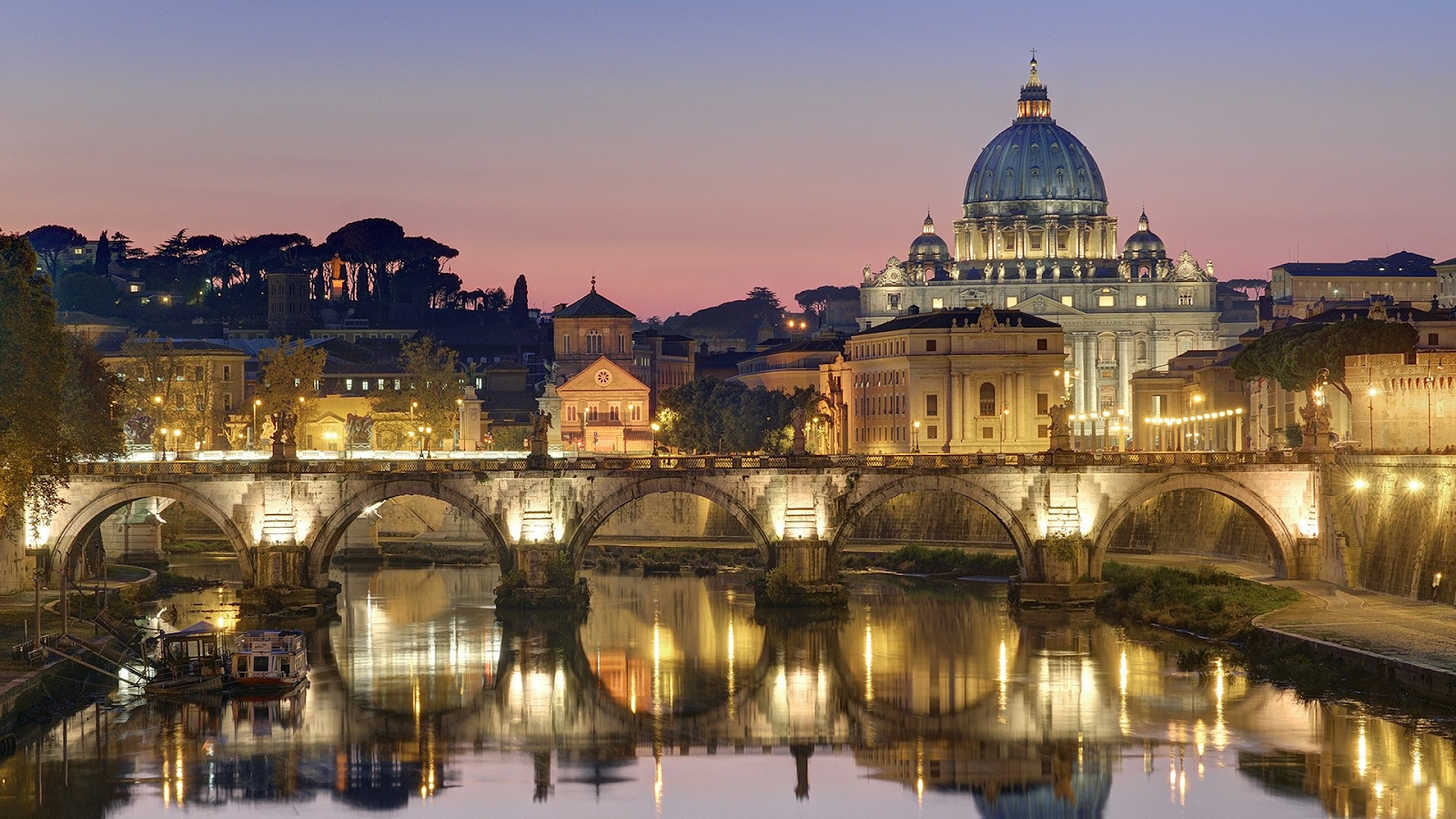
Pontifex Maximus is a title of the Pope which means ‘greatest bridge builder’. This was originally the most important position in early Rome, but was later adopted by the Church based there. In a city divided by a river, it was naturally a very important role.

Less “Bridge of Angels”

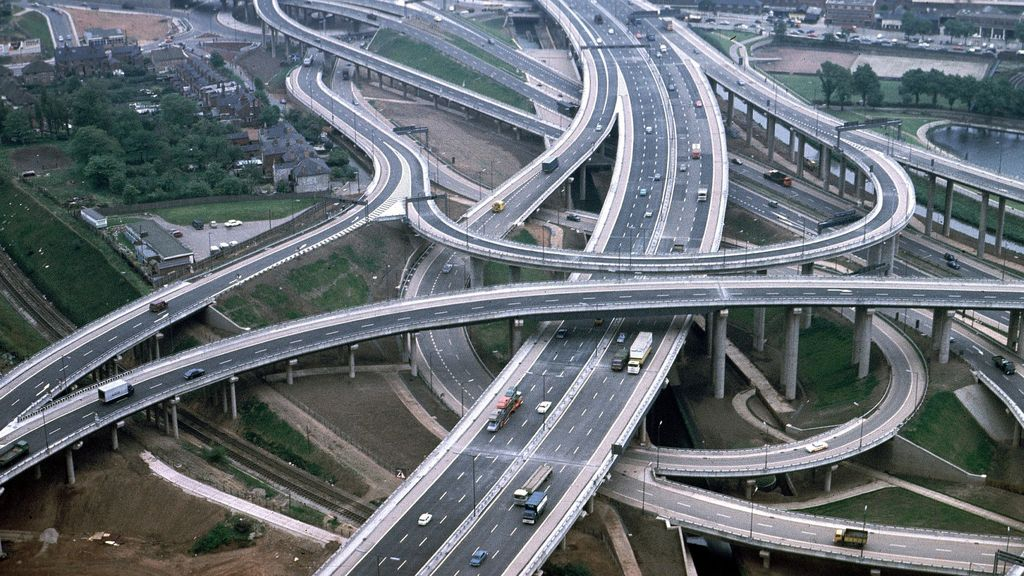
More “Spaghetti Junction”


However it has been less Bridge of Angels and more Spaghetti Junction this last academic year as I dealt with self harm, eating disorders, bereavement, illness, stress, anxiety, school refusers, marriage breakup... and just ordinary teenagers. Expect the unexpected is a good mantra generally for those working in schools, even more so a Head of Year.

For the first time, I have had to work directly with with social services, hospital consultants, the police, CAMHS, the EWO, counselors, home-school support workers, parishes... as well as the parents and carers.

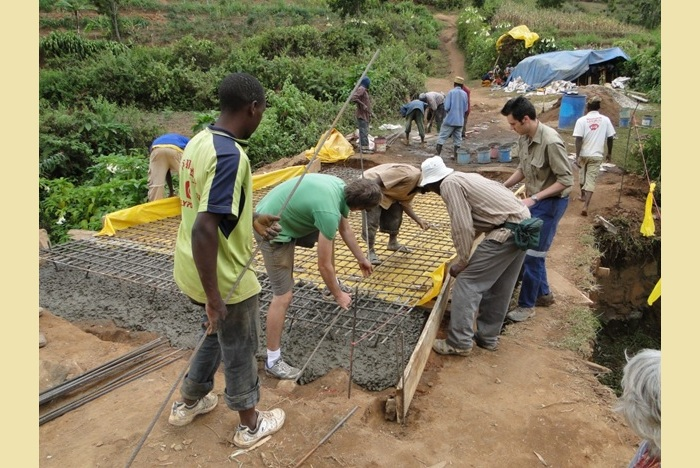
Building The Bridge 


The step from form tutor to pastoral leader such as Head of Year is enormous. The scale and extent is such that a handover is near on impossible.

Jill Berry introduced me to Robert Quinn’s idea that you: "Build the bridge as you walk on it",

This suggests that we are always learning and honing our skills in education and that we may never be ready for the next step of leadership if we wait until we consider ourselves fully trained and prepared.

Is it possible to be train up as pastoral leader? I think one of the most important things is to simply have the determination to succeed, and working out how to invest sufficient time and energy (something, somewhere needs to give at times - working out what that is can be one of the toughest challenges).

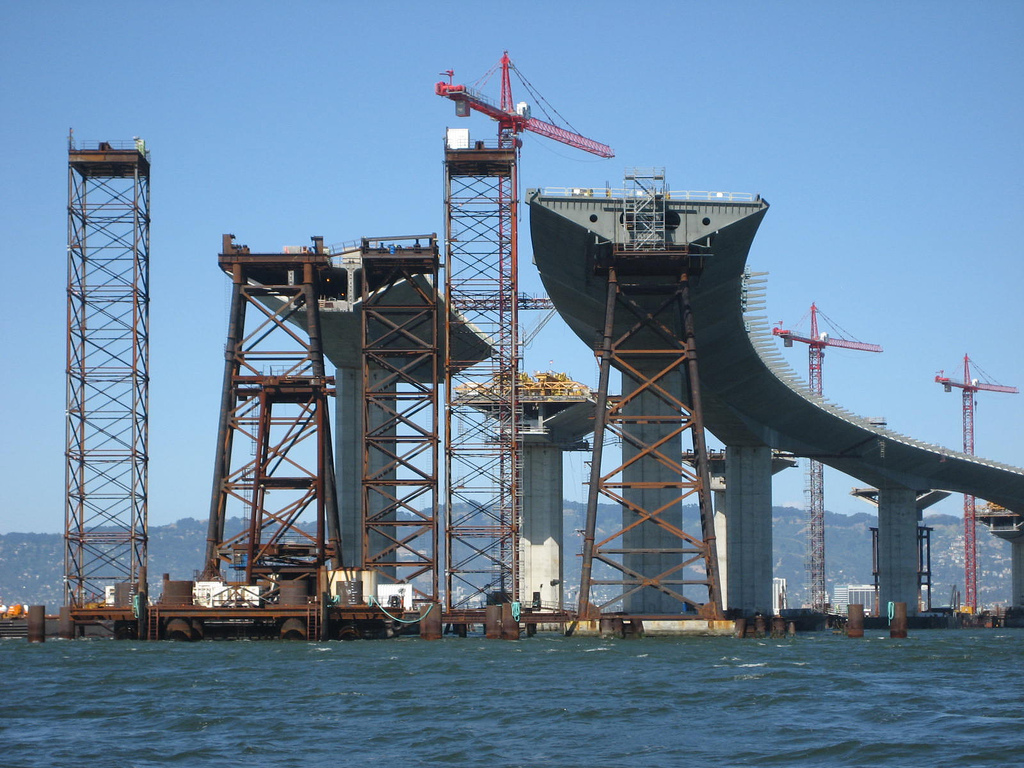
Brooklyn Bridge (New York, USA)

It took just over 13 years (1870-83) from start of construction until opening, or 18 years (1865-83), from the drawing-board to opening. The bridge cost $15.5 million in 1883 dollars (about $379,661,000 in today's dollars)

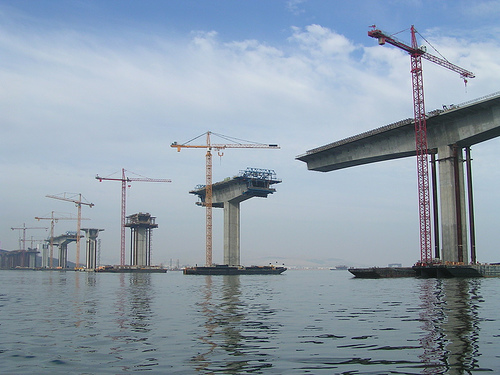
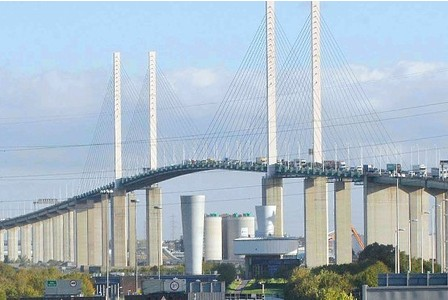
The QEII Bridge (Dartford, UK)

It took just over 3 years to build from 1988 to 1991 at a cost of £120m (£244 million as of 2015).

Building bridges is not quick, nor cheap.

How much time do we give our pastoral leaders? Are non-teaching pastoral leaders the way forward? Or is it better to have someone who is also involved in the pressures of classroom teaching?

How much money do we pay them? Does the money recognise the responsibility, pressure and accountability? In many schools it is far less that academic leaders such as Heads of Department. That gives an interesting message about priorities.

Emergency Bridge Building


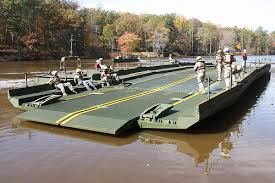
I don’t like using military language in reference to schools, but nevertheless, sometimes as leaders, both SLT and Pastoral Leaders are called in during an emergency. Plus you often need to act like UN Peacekeepers.

Emergency bridge building is a difficult task. Particularly when one side is not willing or ready. They are difficult conditions in which to rebuild your bridge, but sometimes it is necessary. Emergency bridge building, or rebuilding, is a special skill, that requires particular expertise.

Building Together


Everyone in school is actually a pastoral leader. Everyone has a responsibility for safeguarding. Most teachers have a form. They certainly see students in distress; in the corridor, in the playground, in the classroom.

Many love being a Form Tutor. Some see it as an inconvenience. Are they then the ones confused why a student hasn’t done their homework, or is missing lots of lesson for no apparent reason?

It is everyone’s responsibility.

Reams of data, the latest pedagogy, 1:1 iPads, the 'all singing and dancing lesson' are of no use unless someone is ensuring the students in the room are safe, happy and secure.

However also remembering, Jill Berry’s question at TMLondon, “Who would want to be lead by you?” - as a Pastoral Leader are you ready to get your hands dirty and do registers, detentions, admin like everyone else?

Pastoral Leaders are “the oil in the machine” (John Dexter)


Why do your best planned lessons go wrong? It's normally, nothing to do with you or your lesson.

What time, space, status and reward do we give pastoral leaders?

If there is not enough 'oil in the machine', the whole school is in trouble.

Senior leaders, please consider the support that you offer to the pastoral challenges in your school, do you even know what they are?

Why be a Bridge Builder?


In 10 years of teaching, I have never been busier, nor could I ever imagine having so little time to myself. I didn’t even realise some of the things that go on with some of our students. It can be absolutely heart breaking yet equally amazing that they arrive in school and learn anything!

However I am really enjoying the job, and I find it incredibly satisfying.

One thing you need to learn very quickly is that you will never please everyone… some will think you are too hard, and others not hard enough on the students!

Consider it, or make sure you are the people supporting it.


Download the original presentation <here>

Tuesday, 7 July 2015

#TeachMeetCSS: Pontifex (7/7/15)

Image courtesy of Wikimedia

At TM CSS, a leadership-focused TeachMeet, I shared a 7 minute presentation reflecting on pastoral leadership. This is so often not a feature at TeachMeets, nor on blogs or Twitter. This may be partly due to the sensitive nature of many aspects of the job, or perhaps due to the difficulty in suggesting transferable ideas from one school to the next. The questions I want people to go away thinking about are about their pastoral responsibilities... as a classroom teacher or as a senior leader. Also about the time, space, status and reward they give to pastoral leaders in their school: are you doing enough?


Download GoogleSlides <here>
Download PDF with my speaker notes <here>

Tuesday, 24 March 2015

Servant Leadership

Image courtesy of the Catholic Herald

I was asked to write something for a free leadership ebook in May last year. This was apparently too long so never got included. I thought it was particularly appropriate in the run up to Easter. This was my tip:

Don’t be afraid to get your hands dirty; never ask others to do what you wouldn't.

“He poured water into a basin and began to wash the disciples’ feet and to wipe them with the towel that was tied around him.” John 13:5

Some would say an MA in Catholic School Leadership is incredibly specialised and only appropriate for a very small number of teachers and leaders. However after studying closely the leadership model demonstrated by the historical Jesus, I was given a fascinating insight into what Robert K. Greenleaf coined as “servant leadership”, in an essay first published in 1970. Reflecting on Jesus as leader has continually inspired me in all that I do at school.

The defining notion of servant leadership is that the primary purpose as leader is to serve. When Jesus washed the feet of his disciples, he gave an example of how to show great love while doing the lowliest of jobs. It was clear that he was servant first, not leader first. By being a servant, you allow those in your care to grow, and hopefully become servants too.

In this passage, Jesus’ basic motivation was love. He was fully aware of his position as leader; his disciples called him Master and had already shown he was a strong and extremely powerful leader. Jesus voluntarily becomes servant; he wasn't primarily a foot washer, but was ready to do it if required. Finally, he made it clear that it was an example to be followed.

The servant leader is not at the top of the pyramid of power, looking down on all he or she has amassed. The servant leader is at the bottom of the inverted pyramid, sharing power, putting the needs of others first and helping people develop and perform as best they can. Caring can be institutional as well as individual; however big or small our team is, whatever the remit or ‘job to get done’, but can do it with care. If a better team is to be built, one that is more just and more loving, more creative then the capacity to serve must be increased. 

Being a servant leader
  • It’s voluntary – it is beyond your personal interests or interests of others, often for the ‘greater good’
  • It’s using entrusted power to serve others – not mange or simply lead them
  • It’s putting others needs before your own – often through love
  • It’s in word and deed – it is teaching your team to become servant leaders themselves
Questions to consider?
  • Will you, without hesitation, do the jobs you ask others to do? (Cover lessons, supervise detentions, lunch duty)
  • Do you lead in word and action? (Keeping deadlines, marking work, responding to emails)
  • How will you keep touch with everyone that you work with? (Their stresses, workload, pressures...)
  • Who is your servant leader model? Who allowed you to grow into a creative, caring, supportive leader?

Monday, 23 March 2015

"Earning It"

Image courtesy of Wikipedia

As many will know, I am a massive Springsteen fan and despite him being worth over $300m, he still delivers 3 hour plus shows, renowned for their energy and high tempo; he still works very hard despite the fact he may be able to 'get away' with a sub-2 hour greatest hits performance going through the motions. For a while now, I have thought that there is a potential analogy with teaching, especially for those who have been in the job a while, particularly at the same school, do you still 'earn it'?

Jake Clemons, nephew of the late, great Clarence, who now plays with Bruce and the E Street band shared this in an interview:

"There are words that he gave me very early on that stuck with me. He pulled me into the dressing room — I believe it was our second show — and he said, ‘Listen, this is really important: you haven’t earned it. You haven’t earned it. You won’t earn it. You’re still earning it. After 40 years, I’m still earning it.’ Every night he goes on that stage, he’s aware. Everyone there has an expectation. Just like it was on day one. Just like it will be on the last day. And you have to earn it and fulfill that expectation. That was huge. What a beautiful nugget that you can hold on to, and really apply it to everything. The moment you think you’ve earned it, you’ve lost it.” [Read it in full <here>]

Do we ever 'earn it' as teachers?

If we reach middle leadership have we 'earned it'?
... Senior leadership?
... Headteacher?

I'm not sure we are 'only as good as our last lesson' and students are, thankfully, generally forgiving. However your status or title, career length or even perceived 'coolness' does not mean you have 'earned it' in school. 

I think this is the importance of reflection. I hated doing lesson evaluations when I was doing my PGCE, I just wanted to get on with nailing the next lesson. However, I now spend a lot more time thinking about when things go wrong. Sometimes I teach lessons which really don't work, or for some reason, I haven't had enough time to plan it properly (welcome to the world of Head of Year...). If I teach a lesson like this, I really try to 'earn it' back with the next lesson. I feel a real responsibility to convince them that I am better than that last lesson, that I do care, and I do want to deliver great lessons as often as I physically can. 

As a middle leader myself, I am not just trying to 'earn it' with students but also with my department and year team. Do I take my share of the dirty work? Am I willing to do the same as what I ask of others? It can be easy to hide away in your office when that end of lunch bell rings. 

This is one of my favourite live Springsteen videos. The 6th song of a 27 song show. A 60 year old man absolutely 'earning it'. Teaching is a physical job, but so is fronting a rock'n'roll band! Springsteen has a fitness regime that he has carried out for over 30 years involving free weights and running six miles a day in order that he can perform to this level. 


Yet (thankfully) we don't need to knee-slide and dive into the crowd every night... although that would be a great way to get through period 6 on a Friday with Y11.

I hope that went I get to Springsteen's age (65), wealth (!?), status, title (THE Boss) and having a career lasting 50 years, that I still go out every day and make sure I "earn it".