Showing posts with label Pastoral. Show all posts

Wednesday, 6 July 2016

#TeachMeetCSS: "Love and do what you will" (5/7/16)


At the second annual TeachMeet held at Compass School Southwalk in Bermondsey, I decided to take up the theme from a recent blog post (see <here>) and speak about using the word 'love' in schools, inspired by St Augustine.

Listen here: http://talkingdonkeyre.madewithopinion.com/love-and-do-what-you-will 

Here are my slides:


Thanks to Vicky Cockram for organising and hosting us again! See you in 2017...


Image courtesy of: https://twitter.com/exafoundation/status/750405585682718721

Monday, 9 May 2016

All The Small Things


"All the small things
True care, truth brings"
Blink 182

Blink 182 sum up their whole song in the first two lines. Their 1999 hit was written for guitarist Tom DeLonge's wife (as apparently she moaned about him always writing songs about other women!), and it clearly explains the importance of caring about others, and showing them how important they are. Sometimes the "smallest way" can make all the difference in the world to someone. In schools, it is often the small things, that make a big difference too.

Noticing the small things

Some people are solely preoccupied with their teaching. Perhaps they should be; that is our core purpose.

I've heard teachers say, "It is not my responsibility to check uniform." which is unhelpful from a whole school point of view. It's worth remembering that students rarely have too much loyalty and will frequently point out, "Mr X didn't say anything about my nose-stud". Brilliant.

I'd argue that it is the responsibility of all staff to notice the small things, and those who don't, should be challenged. 

Picking up on the small things

It is really hard work constantly picking up on the small things, and carrying them through.
  • What do you do when a student is 5 mins late, but your lesson isn't followed by break or lunch?
  • How do you record who hasn't got a pen or their exercise book, especially when you want to get the lesson started?
  • To what extent do you chase up uniform, especially if they don't have their uniform cards to sign?
  • When do you find the time to chase every piece of missing homework?
  • Do you challenge a student who has an extra earring in, hidden by her hair, if she is behaving well in your lesson (for once!)?
  • You ask a student to see you at lunch for 5mins over a minor issue. They don't turn up. What do you do?
I think, if you do pick up on these small things, you will only need to do it for a while. The greatest thing I had a student say to me was, "You're strict, but at least you are strict all the time... with everyone". However it really is hard work - it is a relentless and tiresome battle, and one that potentially starts again every September.

Yet many would suggest if we allow the small things to persist, unchallenged, then all of a sudden, sometimes without warning, the bigger things will follow. When things slip, and keep slipping, it can be really hard to turn around. This can happen on a small scale, in an individual classroom, or on a much larger scale, whole-school.

My recommendation, is to be organised and put in place systems anticipating the problems. Some staff write down everything in their planner or on SIMs (which is so handy if and when the issues escalate with the student). Schools need systems that are workable for teachers. Rules need to be as clear as possible, with sanctions easy enough to implement, and are followed through. Always. All the small things, true care, truth brings.

Image courtesy of Gigwise

Tuesday, 19 April 2016

"The Best That You Can Do" - Y11's Golden Mean


Jim Bianco is a US-based singer-songwriter who is sadly little known in the UK;  I'm a big fan. I had a YouTube playlist on as I did some marking, when on came, 'The Best You Can Do'. I am absolutely sure this song is not about taking GCSE exams, however I later found myself quoting the song lines in a meeting with a parent and student. 


Finding compromise with students can always be challenging. Many Y11 students still fall into the "You need to be working harder." category. Yet there is a surprisingly high number that fall into the "Please ease up on yourself and your workload.".

This would not be unusual for some of my year group:
  • Wake at: 6.30am
  • Study on bus: 7.30-8am
  • Study in school: 8-8.30am
  • Lessons: 9.05am-12.45pm
  • Revision Session: 1-1.45pm
  • Lessons: 1.50-3.30pm
  • Revision Session: 3.30-5pm
  • Study on bus: 5-5.30pm
  • Homework: 5.30-6.30pm
  • Revision: 7-11pm - or later. Some tell me they work until 1 or 2am.
Failure to do this, in their mind, is to not do what is required. As such, I have had to introduce a 'balance' list for some students for their current well-being. On it I suggest:
  • Have one lunch time per week with your friends
  • Go home at 3.30pm on one night a week
  • Don't discuss school / GCSEs / revision at the dinner table
  • Have one night during the week with no revision
  • Do 30mins of exercise at least 3 times a week
  • Go to bed at 10pm as often as you can
  • Put your phone in a different room for at least an hour a night
As for all humans, well-being often gets ignored in pursuit of some 'greater' goal - in this case GCSE exams. As I have pointed out, usually grades aren't gained or lost in the final two weeks of school; odd marks maybe. Grades are really achieved through two years of hard work, and for many of these students in danger of burning themselves out, they have done just this.

I have introduced The Philosopher (Aristotle) to some Y11s. The Golden Mean is the desirable middle-ground that falls between two extremes: the one of excess and the other of deficiency:

Courtesy of La Audacia de Aquiles

For Aristotle, the balance are seen as 'virtues', which are essential for achieving the ultimate goal, happiness. Sadly, Nicomachean Ethics never quite gets to the section on GCSE revision. If it did, what would it have said? What is our Golden Mean for final exam preparation? 

Returning to Jim Bianco, I think what I hope for, is that every single Y11 that arrives to pick up their results envelop in August can say, "I did my best". Whatever results have been achieved, no one can ask for any more. 

an uppercut a right
you punch with all your might
you hope they throw the fight 
before the bell stops ringing
your face is stinging, the crowd is singing
go out swinging...

do the best that you can do
and hope you make it through [lyrics]

Image courtesy of BMI


Wednesday, 13 April 2016

Y11 Survival: Me or Them?


Surviving the last few weeks as a Head of Year 11 is tougher than I thought. I'm in my second year as a HoY taking the cohort up from Y10 to Y11 in my all girls comprehensive. It feels close the great climax... A mountain climbed? Or am I on cliff edge? Bit of both?

Since the start of March, I've noticed my pastoral workload has become incredibly demanding. Any time in school seems to be taken up by these pastoral issues and lunch is generally taken while 'on the go'. It has taken my full 10 years of teaching experience to manage some of the situations, and there are still more where I look back and still wonder if I made the right choice in handling a student, parent or colleague.

As HoY, you are rarely perceived to get the balance right... Some will say you are too hard, others too soft. I know I have high standards and expectations of my year group, but equally I think I know (most of the time) when and where to put that pressure on. 

Some people have been amazed that I have maintained that detentions take priority (revision sessions are a privilege to be earned). They still receive sanctions for uniform, lateness, mobile phone usage etc. I've sometimes rearranged the detentions to ensure they have the minimum impact on colleagues plans, but the students need to take responsibility for their actions regardless of their pending exams; I have been unapologetic when I maintain that Y11 still need to follow the school rules. 

The following have all been a major feature of the last 4 to 6 school weeks, and will no doubt continue for the next 4. The RE exam on the 16th May is a major date in my diary as both subject teacher AND HoY. Study leave will have begun!

  • Tears
  • Fights
  • Rudeness to staff
  • Friendship Issues
  • Poor Physical Health
  • Over Tiredness (falling asleep in lessons)
  • Mental Health Issues

Knowing all this, rarely have I felt so conflicted, especially as I have my own Y11 GCSE RE class. Homework, revision classes, additional exam papers... and I am just one of 9 or 10 subjects. 

The trouble is, staff are also at a point where they are over stressed (and pre Easter, over tired). When you only have a few lessons to go and you haven't finished the syllabus, you - perhaps quite rightly - have very little tolerance for students doing anything even remotely short of your expectations. Equally, when you know pay progression depends on these students achieving their target, it's understandable you want the class in front of you firing all cylinders.

Perhaps my problem is that I do try to help, and intervene, and find ways forward and devise strategies for both the staff and students. I always try to say something more than "thanks for letting me know". I think it's part of the problem of pastoral leadership for many, it's not just a TLR but a vocation. However it does mean my inbox keeps going 'ping' and if I venture into the staff room I need my notebook and pen (being organised and recording everything in your own little systems is the only way to cope with pastoral leadership).

Being pro-active seems to be the best approach at the moment. Trying to keep my eyes open and ears to the ground. Anticipating the problem before it happens. Thankfully I have some excellent tutors to help; they are the front-line in many respects. I have managed to develop enough positive relationships that I can usually get to the bottom of 'the issue' quite quickly. 

It's been a real eye opener for me. I used to be the first to complain when a Y11 didn't do my homework or pay 100% attention in my lessons at this stage. But now when I sit down and have a chat with a tearful 16 year old and discuss what's going on at home, in Maths, in after school Science revision, on social media and with their boyfriend, I understand a little better. Some of that is nothing to do with me, but as a child, it can be hard to draw the distinctions. All of it can seem unsurpassable.

As difficult and demanding as it is, this job still feels like a privilege. You get an insight into the real world of the teenager, and it's a pretty tough place. Knowing all this can only make me a better teacher, right?

I used to think every student needed a champion, but now I realise that every student needs positive relationships. For some it's a champion, for others a listening ear, others an uncompromising disciplinarian. Amazingly most seem to appreciate it; I even get the odd 'thank you'!

Image courtesy of Wikimedia

Wednesday, 23 March 2016

#TMLondon: My Great Form Tutor

Photo by @benniskara

As well as arranging the competitions, prizes and thanking our sponsors I managed a 2 min presentation at TM London:


A short reflection as a current Head of Year, former Form Tutor (something I really miss) and member of Athens 1995 to 2000.

I remember how he was there on there on day one to make us smile and feel relaxed. He told us all the vital information that noone else did. The toilets are there… Lunch is at 12.30pm… Make sure you get a parent to sign your planner for Thursday.

I never felt like we were an afterthought or an inconvenience in his busy day. In fact, he got to the form room 5 minutes early at PM registration if we wanted a chat. I knew he would be able to help any issue that I had. Academic, social or even personal. He was someone who I could really trust.

He checked our uniform twice a day. In the end, we just knew to be smart. At the end of registration we always stood behind our chairs, went silent and he wished us a good morning or good afternoon.

If our form tutor wasn’t there, we always knew what to do. Wednesday was always silent reading day. Cover teachers were always amazed that we got our books out and started reading automatically. Our tutor used to read his book during this time too.

He checked if we had a pen in the morning. If we didn’t, he’d lend us one. We had to spend 15 minutes doing ‘community service’ at lunch to make amends though.

On a Friday, we had a form assembly. He used to insist that we included 3 bits of news: local, national and international. Someone then played their favourite song on his cassette deck, we all listened, even if we didn’t really like the music choice.

We used to get ALL the school news. Other forms came to find out from us. Everything was read out and went on the notice board. We all got involved in lots of extra curricular activities.

Our tutor had his purple folder, he called it the Bible (he wasn’t religious, but said it was the most important book he had). He kept track of everything to do with us in it: letters, detentions, merits...

Lots of other forms didn’t enjoy PHSE lessons, we did. It was clear our tutor knew what he was talking about it; it was like any other lesson. Sometimes better.

We didn’t want to get in trouble, it was like letting the form down. Our tutor wouldn’t shout if we did, but he always suggested we apologised to the teacher we had upset and make amends.

He wasn’t our friend, but he was special to us. We belonged to him, and him to us. We used to laugh when he told us jokes, and we all got very sad when his mum died.

Fast Forward 20 years…

My great form tutor is the front line, she picks up on everything. She is my ears, eyes and heart in 11X. She is the adult the students see twice a day, she always notices first if something is not right.

She knows which students are doing well, and in what subjects, she also knows where there is a cause for concern, and she always lets me know. She has great relationships with the students, and many of the parents.

It may be chance that absence is less of an issue in her form, but she follows up notes straight away and always finds out why they weren’t in school. Her form are always the most involved in every inter-house competition and charity event, even in Year 11.

She has helped every student plan their revision, and discusses stress relieving techniques with them on a regular basis. She also always has an activity up her sleeve: a quiz, a puzzle and thinking game.

Her form never leave registration noisily, they are always ready to work in Period 1 and 5.

She has really high expectations, of everyone, all the time! One student said, “She’s like our school mum”.

Being a form tutor is one of the most human parts of being a teacher.

Great form tutors make it easier for everyone to teach, and everyone to learn.

Form groups are often when the happiest memories are formed, and everyone remembers a great form tutor.


What kind of form tutor are you?

This isn't a true story sadly. It's a mixture of what I experienced at school, what I wanted at school, what I've tried to do, and what I encourage others to try and do. 

Friday, 4 March 2016

If we want them to revise...


Wednesday was a 6 period day with a working lunch. It was really hard work and I then spent over an hour catching up on the day (ah... emails!), before heading home shattered around 5pm. I had some work to do on my textbook and naturally wanted to spend some time with my wife and young son. I know I would find this an impossible way to work day in and day out.

However that's what many staff are expecting of Y11 students at the moment. Thankfully no one wanted the pre-school slots, but visit the form rooms at 8am and there are many in working. They then attend lunchtime and after school revision sessions.  Some then head to various areas to work on coursework or other controlled assessments. They then leave when the bells signal it's time to go home at 5.40pm.

They then have homework to do, and of course revision. They also need to get the bus, or maybe two.

Is it any wonder that, as Head of Y11, I have parents calling me worried about their daughter? Students crying with the pressure? Reports of students falling asleep in lessons? Teachers complaining students are not doing the extra exam papers they set? Mental health issues are on the rise, while the services that help with our care of these young people face severe cuts.

The pressures internally and externally are creating a 'perfect storm' of pressure - and both students and staff are starting to really feel it. We must do something to combat it. We must play our part in trying to ease this situation. League tables, OFSTED, Performance Related Pay, EBacc... is everything really in the interest of the students? If not, maybe we need a different perspective.

I've written about the effectiveness of revision sessions before (see here), but I genuinely feel the culture is becoming unsustainable for all concerned. I also don't think it is helpful, in the long run, for our students. Particularly at GCSE, we can be very guilty of 'spoon feeding': providing revision guides, revision sessions where we do 'a unit in 30mins', Easter holiday 'catchup'.


Yet students then begin A-Levels thinking the same way. However it's far harder to provide similar 'get out of jail free' cards. There is confusion from students. Sometimes the realisation that they need to do it for themselves (and should have been doing all year long) comes too late.

If we removed this expectation (implicit or explicit?) of revision sessions, maybe we'd take away 'comfort blanket' that students feel... my teachers will work in overdrive to help me pass my exams. I sometimes ask my Y11 cohort - who is working harder right now? You or your teacher? Often the answer is the latter.

We need to make students realise that after 18 months of failing to work, last minute revision sessions won't solve their problems. If you have attended over 200 hours of English lessons, will 5 hour-long revision sessions make any difference? 

Schools have become obsessed by interventions, a buzz word that's become every day usage in education, which often means teachers should be able to demonstrate and document that they have gone above and beyond with students. Where does good teaching end and intervention begin? I'm all for identifying the underachievers and trying to get to the bottom of why they are underperforming, and teachers are well aware of their responsibilities to get the best grades possible. What's intervention? What's revision? What's just teaching?

I really enjoyed Shaun Allison's blog on "What to do with Y11?" (see <here>) and shared it with all staff. I really think that teachers should be putting all their energy and time into delivering the best possible lessons: "the people who will make the real difference between now and the exams are the teachers that see Y11, day in and day out.". The advice that Shaun then provided about effective learning and revision was excellent - read it, share it widely!

It's my first time as Head of Y11 and it has been a steep learning curve. In my somewhat limited experience, what would I do differently?
  • Abolish the 'official' revision timetable (sadly staff don't stick to it anyway and we end up with staff competing and undermining one another).
  • Discourage all revision sessions.
  • Encourage staff to plan for learning throughout their syllabus (principles of metacognition and effective learning) so revision doesn't become such high stakes.
  • Create effective work spaces for Y11 at lunchtime (i.e. a rota for the four form rooms for lunchtime: silent work / quiet work / 2x social - and enforce it!)
  • Maintain detentions for work, homework and behaviour issues - these expectations must remain at the core of effective learning.
  • Generate a culture of greater independence, self-reliance, determination and consequence - if you do not work, there will be repercussions (and it won't be a teacher reteaching you after school and in the holidays!).
I believe that this will help in some way create less dependent and teacher-reliant GCSE students. It will also be beneficial for the mental and emotional health of both staff and students, taking off some of the high stakes pressure.

I fully admit some of the students in my care have not woken up to the fact that their exams are coming up very quickly. This is a separate issue, that needs to be addressed in a separate way. 

John Tomsett wrote in his blog:

“All I can ask is that, on results day in August, we can truthfully say to ourselves that we did the very best we could without damaging our own mental health or the mental health of our students. We must not push for even better examination results at the cost of our well-being.” <see here>


My Y11 students, come August, will always be more than a set of grades. I also want them to be healthy (physically and mentally), happy, knowing that they can go out and change the world for the better in many, many different ways.


Images courtesy of PixabayWikipedia and Pixabay

Tuesday, 9 February 2016

TM Bexely & Greenwich: 5 in 5 - Being A Great Form Tutor


Sadly I was unable to attend this TeachMeet and support the amazing team behind it - they were so supportive of TM Havering events and I wanted to return the favour. Their theme was "#FiveIn5" which a brilliant way of focussing loads of advice in a small slot (and similar to the Starter for Five blog). Anyway, here is my video presentation of on "Being A Great Form Tutor:


Saturday, 19 September 2015

LAUNCH: The Relational Teacher


I was very fortunate to be invited to Rob Loe's launch of The Relational Teacher book and film at St Catherine's College, Cambridge on 17th September 2015. I've heard Rob speak at both SLT Camp and TeachMeet CSS, his enthusiasm for the project is infectious. 

The key note address was from Susan Pinker who was discussing her research featured in The Village Effect (see <here>). She discussed how face to face relationships make us feel happier, reduce stress… and help us live longer. 


She also discussed, with some excellent cartoons, why it is important to distinguish between face to face and digital relationships. Sometimes we confuse the two, or allow one to take the place of the other.

The study used for her book (35,000 people over 7 years) found that close close relationships and good social integration have the greatest effect (excluding genetics) in making you live longer - far more effective than exercise or clean air!

It was then time for the main event...

The Film

“Outstanding relationships between teachers and students correlate with their academic success”


RSA Fellow Rob Loe, The Relational Schools Project has spent the last two years working with schools to explore these issues, and has developed a robust database of evidence that clearly shows the vital importance of good relationships between teachers and the children they teach, in the achievement of great student outcomes.

This is, of course, something that all good teachers know instinctively. But by applying the Relational Proximity framework[1] developed by Relational Analytics to their analysis of classroom interactions, Rob and his team have been able to assess the quality of relationships in schools and, in many cases, correlate these directly to student outcomes.

The findings will warm the cockles of anyone who understands the true importance of teaching. <Source>


The first half of the film was enjoyable watching, with some heartwarming discussion about the importance of relationships in schools. However, it was the second half which prompted the real thinking for me:
  • The female PE teacher who was questioned on her Y9 class relationship was a fascinating insight into how we can sometimes totally misjudge our relationships in school. As some of the students were in her form, and many attended extra curricular clubs, she felt there were lots of positive relationships. However using the proximity framework, there was a correlating pattern, but the gap between the two perceptions was significant. When discussing the relationships with the students, they were very divided on their view of the teacher. In fact, she had misjudged the relationships overall, because of the relationships with some of the students in the group. 
  • I think this is a quite common mistake. Our view of particular teaching groups can often be swayed by one or two challenging students, or a small core group of excellent students. The effects of this, on a potentially significant number within the group, can be disaffected by the teacher and the lesson.
  • The male science teacher modeled really positive relationships with his class; it was clear he was very popular with his students. When questioning his students, it was at first hard to get beyond 'he's funny'. However Rob later looked at the attainment data from his classes and there was direct correlation between the positive relationships and over achievement - simply put, better relationships lead to better outcomes.
  • This is clearly something we could have guessed, but the data seemed to suggest that this link was measurable and significant. It would be hard for teachers to replicate the teaching style of the lesson, there was a lot of 'personality' in it. Yet, it is a clear reminder of how vital relationships are. Perhaps even more so for students with low aspirations or who are deemed less able.
Q&A


Rob pointed out that relationships in school need not be different from relationships in the wider world, and particularly the family. For example, who has a competition for ‘most motivated member of the family’? Or reads motivational quotes over breakfast in the kitchen? Do we therefore need these in school?

It was also pointed out that students discuss teachers a lot. They frequently try to identify what makes a good teacher and what makes a bad teacher. Treating people fairly comes up a lot.

Where do we go next? This is the really tough question for Rob and his team. They will now continue to build data to back up the value of relationships and it seems they are willing to work with schools to help them improve this. Their over arching view seems to be that we live in a fragmented society, but with more cohesive schools, we will end up with a more cohesive and stronger society. This is better for everyone.

Post-Film Social & Conclusions

As always, some the best discussions happen with a glass of wine towards the end of the evening. I was discussing and reflecting on my own position:
  • As Head of Year, I frequently find myself in the role of 'bridge builder' (see blog <here> ). I am now far better at helping staff restore relationships for themselves. If I intervene, the common result is my relationship with the student improving - even if I have simply backed up a colleague, told them off and put them in detention. Rob recalled a teacher featured in the film discuss how as HoY and having certain characters frequently in detention, strong relationships were developed. The time spent, and conversations had, even if largely about the behaviour incidents, helped form strong relationships. It's also why I now spend a lot of time, 'just checking in' with certain characters in my Y11 cohort. When they do break the rules, it can be easier to remedy.
  • A few people commented on how it was very refrshing that there was no mention of Progress 8 or OFSTED. However some did ask, should Lucy Powell be sent a copy? Would, could, should this be a key part of a Labour education policy?
I came away with a copy of the film and book, but there was a personal 'where next?' too. Could I recommend for whole staff CPD? I fear there would be a significant number who would dismiss the film as too obvious and a waste of time in a school like ours where many relationships are good. Could we overcome this to focus on what I feel are the existing key findings from this study? Could we help staff to improve relationships? Should this be part of the new staff induction? For trainees?

I look forward to reading the book as well as keeping up with the developments of the project. Thank you Rob and team for a great evening.

Buy the book and film <here>
Read more <here>

Tuesday, 8 September 2015

Pontifex: An Etended Metaphor


Before I decided upon this metaphor for my first year of pastoral leadership, I needed to check with a priest (and canon lawyer) that it was acceptable. After all, Pope Francis uses Pontifex as his Twitter handle and one of his many titles is Pontifex Maximus. Given this is written in the light of my MA in Catholic School Leadership, excommunication for heresy was not my intention! However for Catholics and non-Catholics alike, I feel Pope Francis does give an excellent example of leadership: servant-like, love-filled and compassionately just. I have written about my first term of pastoral leadership previously, see <here>.

Pontifex: “Bridge Builder”

Pontifex Maximus is a title of the Pope which means ‘greatest bridge builder’. This was originally the most important position in early Rome, but was later adopted by the Church based there. In a city divided by a river, it was naturally a very important role.

Less “Bridge of Angels”

More “Spaghetti Junction”


However it has been less Bridge of Angels and more Spaghetti Junction this last academic year as I dealt with self harm, eating disorders, bereavement, illness, stress, anxiety, school refusers, marriage breakup... and just ordinary teenagers. Expect the unexpected is a good mantra generally for those working in schools, even more so a Head of Year.

For the first time, I have had to work directly with with social services, hospital consultants, the police, CAMHS, the EWO, counselors, home-school support workers, parishes... as well as the parents and carers.

Building The Bridge 


The step from form tutor to pastoral leader such as Head of Year is enormous. The scale and extent is such that a handover is near on impossible.

Jill Berry introduced me to Robert Quinn’s idea that you: "Build the bridge as you walk on it",

This suggests that we are always learning and honing our skills in education and that we may never be ready for the next step of leadership if we wait until we consider ourselves fully trained and prepared.

Is it possible to be train up as pastoral leader? I think one of the most important things is to simply have the determination to succeed, and working out how to invest sufficient time and energy (something, somewhere needs to give at times - working out what that is can be one of the toughest challenges).

Brooklyn Bridge (New York, USA)

It took just over 13 years (1870-83) from start of construction until opening, or 18 years (1865-83), from the drawing-board to opening. The bridge cost $15.5 million in 1883 dollars (about $379,661,000 in today's dollars)

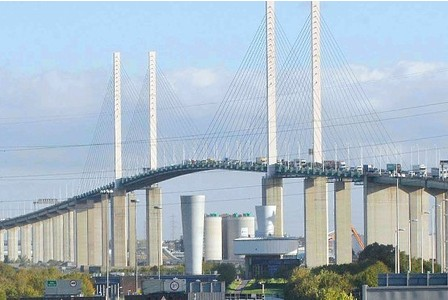
The QEII Bridge (Dartford, UK)

It took just over 3 years to build from 1988 to 1991 at a cost of £120m (£244 million as of 2015).

Building bridges is not quick, nor cheap.

How much time do we give our pastoral leaders? Are non-teaching pastoral leaders the way forward? Or is it better to have someone who is also involved in the pressures of classroom teaching?

How much money do we pay them? Does the money recognise the responsibility, pressure and accountability? In many schools it is far less that academic leaders such as Heads of Department. That gives an interesting message about priorities.

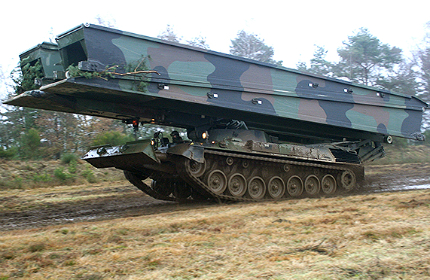
Emergency Bridge Building


I don’t like using military language in reference to schools, but nevertheless, sometimes as leaders, both SLT and Pastoral Leaders are called in during an emergency. Plus you often need to act like UN Peacekeepers.

Emergency bridge building is a difficult task. Particularly when one side is not willing or ready. They are difficult conditions in which to rebuild your bridge, but sometimes it is necessary. Emergency bridge building, or rebuilding, is a special skill, that requires particular expertise.

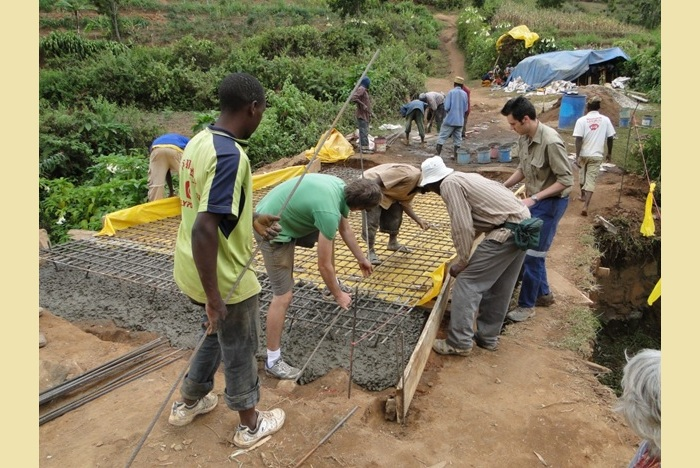
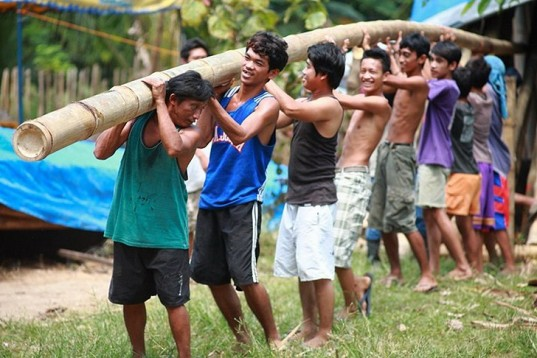
Building Together


Everyone in school is actually a pastoral leader. Everyone has a responsibility for safeguarding. Most teachers have a form. They certainly see students in distress; in the corridor, in the playground, in the classroom.

Many love being a Form Tutor. Some see it as an inconvenience. Are they then the ones confused why a student hasn’t done their homework, or is missing lots of lesson for no apparent reason?

It is everyone’s responsibility.

Reams of data, the latest pedagogy, 1:1 iPads, the 'all singing and dancing lesson' are of no use unless someone is ensuring the students in the room are safe, happy and secure.

However also remembering, Jill Berry’s question at TMLondon, “Who would want to be lead by you?” - as a Pastoral Leader are you ready to get your hands dirty and do registers, detentions, admin like everyone else?

Pastoral Leaders are “the oil in the machine” (John Dexter)


Why do your best planned lessons go wrong? It's normally, nothing to do with you or your lesson.

What time, space, status and reward do we give pastoral leaders?

If there is not enough 'oil in the machine', the whole school is in trouble.

Senior leaders, please consider the support that you offer to the pastoral challenges in your school, do you even know what they are?

Why be a Bridge Builder?


In 10 years of teaching, I have never been busier, nor could I ever imagine having so little time to myself. I didn’t even realise some of the things that go on with some of our students. It can be absolutely heart breaking yet equally amazing that they arrive in school and learn anything!

However I am really enjoying the job, and I find it incredibly satisfying.

One thing you need to learn very quickly is that you will never please everyone… some will think you are too hard, and others not hard enough on the students!

Consider it, or make sure you are the people supporting it.


Download the original presentation <here>
Wednesday, 8 July 2015

RE: Radicalism and Extremism

Image courtesy of 5 Pillars

After the attacks that killed many British holiday makers in Tunisia, David Cameron said that the fight against Islamic State is "the struggle of our generation" (see <here>). Schools are the "frontline" of this "battlefield" and will have a legal duty to prevent their pupils being drawn into terrorism from July 1 2015, when new counter-terrorism guidelines come into force. Sadly a number of school age students have left the UK to join IS forces. There has also been the Trojan Horse inquiry (Park View is apparently to soon change name to try to combat recruitment crisis), on top of the British Values agenda for school leaders; there is seemingly much to be concerned about in our schools.

In an extension of current safeguarding laws, teachers are now being asked to try and spot signs of radicalisation and extremism. They must also report children’s interest in extreme ideologies, even if they are legal. This provides many difficulties and complexities. Many have claimed, quite rightly that they are teachers because they want to "enhance intelligence, not gather it" (See Waqar's thoughtful blog, as a Muslim RE teacher, on this <here>).

Already there is already much confusion. Nicky Morgan MP has suggested, one indicator could be intolerance of homosexuality for example; "Sadly, Isis are extremely intolerant of homosexuality." (see <here>). “Teachers cannot be turned into spies”, claimed NUT leader Christine Blower. This creates significant hype that then needs to be unpicked.

There is likely to be fear among teachers and leaders in schools because it appears this may be another accountability measure for forced academisation, OFSTED or even capability proceedings. Sadly the RE community seems to be pushed to the forefront again with some teachers reporting headteachers are forcing them to teach Islam RIGHT NOW, regardless of any syllabus or year by year planning.

I was fortunate enough to go to a training day held by Havering Borough entitled: Safeguarding Children Online: Radicalism and Extremism hosted by the excellent Penny Patterson and inspirational Sara Khan. The morning full of fascinating input got me thinking about a lot of issues connected to young people and their use of social media.

The explanation of the law change was a clear one. It is not what Morgan, Blower and the press would have us believe. This is simply an extension of our safeguarding and child protection responsibility, reflecting more recent concerns including the threat of IS and other Islamic extremists, as well as the Far Right. One issue is that of the, perhaps poor, Government definition of extremism essentially being "against British Values". Now, many do not object to the values themselves, but they do object to the concept and implementation in schools.

We as teachers need to look out for signs of all types of grooming: withdrawal, changes in behavior, secrecy. Often we do not know what students are being groomed for, nor is it our place to investigate. It may be sexual abuse, sexual exploitation, domestic violence, other physical and emotional abuse, radicalisation, gang membership. Is it possible to say that you will look out for some forms and not others? If you are concerned about anything, you simply alert the responsible safeguarding member of staff, let them make the decisions.

Some examples were given of primary age children telling staff, "We're going on holiday to Syria". This should ring alarm bells for any responsible adult. Did the friends of some of the teenagers who have left to fight for IS really give no clue as to what they were planning? Had their friends known their teachers would have been able and willing to help, would they have informed them? Maybe.

Education and information is vital for all staff. How many would be able to distinguish between conservative or traditional, and extremist Islam? To some, praying five times a day and fasting during Ramadan seems pretty extreme! It does not seem unreasonable for teachers to give themselves a suitable grounding in spotting signs of radicalism and extremism in the same way they have a basic knowledge of the danger signs of self harm, drug using. eating disorders and sexual exploitation. We have never been expected to be the experts, but we are the people that spend the most time with our students. We are the people that may spot these things. We are the people that can help young people that have been filled with false hope and romantic naivety.

I urge teachers to not be afraid of this extension to our care. There are ever more dangers to the children in our care while social media continues to allow unparalleled and completely unregulated access to all kinds of individuals and groups. IS is sadly just one of many threats. The Far Right, gangs, those promoting eating disorders or self harm all have a presence, alongside many more in an ever changing landscape.

So what about RE? We're going to sort this problem for everyone some headteachers think. An RE colleague suggested this: 
  1. Support RE in your schools and ensure it has a focus on knowledge of the religious traditions. 
  2. Allow students to approach religion critically and allow it to be challenged. 
  3. Educate students about the reliability of sources and information. 
  4. Don't think RE can do it all.
(Thanks to Daniel Hugill for these)


Safeguarding has never been the responsibility of one department. It is always a whole school issue, with every single adult in a school having their eyes and ears open for our vulnerable children, whatever the danger may be in their lives. I don't see this as spying, it is an act of love.

Tuesday, 7 July 2015

#TeachMeetCSS: Pontifex (7/7/15)

Image courtesy of Wikimedia

At TM CSS, a leadership-focused TeachMeet, I shared a 7 minute presentation reflecting on pastoral leadership. This is so often not a feature at TeachMeets, nor on blogs or Twitter. This may be partly due to the sensitive nature of many aspects of the job, or perhaps due to the difficulty in suggesting transferable ideas from one school to the next. The questions I want people to go away thinking about are about their pastoral responsibilities... as a classroom teacher or as a senior leader. Also about the time, space, status and reward they give to pastoral leaders in their school: are you doing enough?


Download GoogleSlides <here>
Download PDF with my speaker notes <here>

Wednesday, 28 January 2015

Metacognition for KS4 & KS5

Image courtesy of OpenClipArt

After being appointed as Head of Year 10 for this academic year, one of the things that I wanted to put in place was a useful and meaningful set of study skills lessons. 

To many active Twitter and bloggers, none of this information on metacognition will be new or revolutionary. However despite hearing it discussed frequently on these mediums, as well as at TeachMeets, I have not come across many resources geared towards students. 

I've started with a booklet which is still is in "Version 1" format. I have distributed to Y12 and Y13 RS students and parents recently who seemed interested. I mentioned my work to some Y11 parents who have also emailed and requested a copy. Given the interest and demand, I am now looking at ensuring this resource as good as possible before distributing further. My view is that:
  • It must be concise - I've printed into a A5 readable booklet.
  • It must be user friendly - understandable for Y10 to Y13 students and parents.
  • It must be practical - giving some tips of how this research can manifest itself in a revision timetable.
Download V1 of the booklet here: http://tiny.cc/metacognition15 [PDF] and http://tiny.cc/metacognition15doc [Doc]

Download my [draft] 'Learning Review' here: http://tiny.cc/learningreview - I envisage students completing this and then going through answers with their tutor or with the above booklet.

Big thanks to Daisy Christodoulou [@daisychristo], Tim Worrell [@musotim], Peter Mannion [@PeterCMannion], Alex Quigley [@HuntingdonEnglish], Turnford School [@turnfordblog] and Shaun Allison [shaun_allison] for their help and inspiration. Also thanks to Daniel Hugill [@danielhugill], Mark Shepstone [@MrShepstoneRE], David Ashton [@thegoldencalfre] and Neil McKain [@nmckain] for some initial feedback!


Monday, 26 January 2015

#TMBett15: Pastoral Stuff @ TMs (or the lack of)

Image courtesy of @ICTmagic @UKEdMag

475 teachers in Excel after a busy day at BETT. It must be TeachMeet BETT... generally regarded as the biggest TM going. 

I put myself down to present last year and got a little disappointed at not getting picked. Every other TM where I have put myself forward, I have always got to present, but this is no ordianary TM and those willing to share their ideas could easily fill a few days! 

This year, I went for a 2min presentation creatively entitled "The Oil in the Machine": Pastoral Stuff @ TMs (or the lack of) which can be found at: http://tiny.cc/tmbett15 

I can only presume it was well received from my TL, which went MENTAL. It seemed to strike a chord with many... we don't talk as much about pastoral issues as we do academic / pedagogical. There are lots of reasons for this, but as I read through my tweets, added new followers and favourited all the nice comments, I did wonder if there is a way of better connecting those who are blogging and tweeting about pastoral issues. Is there space for another hashtag? Or another weekly Twitter chat? Is there another way?

It left me some food for thought. It'd be great to hear from more pastoral leaders (all of us!) who are tweeting and blogging about these issues as I want to read more... I'm still new to this post and want to be as good as I possibly can at it; I'd like to share in your wisdom! Get in touch.

Tuesday, 13 January 2015

A Term of Pastoral Leadership

I
Image courtesy of Jason Rodgers

Last year at school, I was seriously considering my options. Career progression is often a little slower in the RE Departments of Catholic schools, but it's a sacrifice I am willing to make. I work in a good school, where the majority of the students are amazing and lovely. I also have always had in my head that I wanted to 'walk before I could run' having seen inexperienced staff in positions of responsibility and been somewhat out of their depth. However after 8 years of teaching, including 3 as Assistant Subject Leader in RE (significant in a RC school, thankfully with a sizable TLR payment), I wondered what my next move would be. A few Head of Department jobs came up and I was seriously tempted to start the application process...

Then two of the PDCs (Pupil Development Coordinator; known as Heads of Year in most schools) handed in their notice and a third retired. The general expectation from all is that I would apply, get the job and do it well. No pressure whatsoever!

I did apply, I did get one of the jobs and I was given the PDC role for Y10; a tough and daunting prospect given that I had never even been a KS4 form tutor! However it was in plenty of time for a good handover, plus plenty of planning and reflection time before the 1st of September.

In my research, one of the first things I came across was Andrew Old's blogs from 2010 entitled Good Year Heads, see <here>. I had mixed emotions when reading it... (and it is best if you read Andrew's post before reading on with mine!)

Experience
Did I have enough? It would be my 9th year teaching, 10 if you include my PGCE. Year heads always have to have an authority as well as wisdom; often you don't get second chances to get things right. I also didn't know if this was final aspiration or not, and I still don't. However I have always considered myself as having interest in a pastoral role and so it was simply 'taking whats there' in terms of career progression. 

Focus
Thankfully I am known for enforcing rules, sometimes I've even been called mean. Behaviour management is so important to all teachers, and as a HoY, this extends beyond the classroom and into other peoples classrooms too. I knew I would have high expectations and, despite the hassle it causes me, I have enforced these. I have returned to basics, outlining my exact expectations for form times, uniform et cetera and put in all form rooms as a point of reference for students and tutors. I have an ever growing collection of 'diamonte' earrings on my desk too. 

Pro-Teacher Sympathies
I totally agree with Andrew on this, no one appreciates a HoY as an appeaser who becomes 'a friend' to the students. I back up every single member of teaching staff when dealing with students. You do pick up a lot of behaviour issues, some that you perhaps shouldn't have to, but the message always has to be the same, you must behave, no excuses. This does not mean you cannot also be a listening ear and champion to the students in your year group. 

Helpfulness with Workload
As HoY, I've realised that you need systems that are simple and effective. I do remember what it is like being a form tutor, and it can be a nightmare! Our school now has a duel tutor system, so there is more time to do the admin tasks but I do always try to alleviate unnecessary pressure where possible. Our CP (Citizenship and PHSE) programme has often been an issue, but this year I have tried to produce the lessons by Tuesday at the latest, ready for the Thursday lessons. I have also organised a number of whole year sessions allowing them to sign planners thoroughly and without distraction.

Thoroughness
I try my very best to do everything I say I will, follow up with every one I say I will and keep every promise I make! I think it is for others to comment on how well I do this, but again I have lots of systems in place to help me. If someone stops me on the corridor, I ask them to email me or write it down too, I have a to do list prominently on my desk, I have various filing systems with my email and various trays and files, plus two diaries. It seems to be working reasonably well... It is easy to receive 30+ emails a day, with a significant number needing some kind of response. However I've also learnt how to assertively say "no", or "That's an issue for the Head of Department", or "What sanctions have been put in place so far?". 

Andrew concludes by pointing out, "...year heads can make such a difference, more than other middle managers, more than most SMT...". Already I've realised the reach and responsibility of the Year Head, and in particular the way in which many staff look to you to solve problems (from the really big stuff to the trivial stuff). However I've also realised that actually, when you can find the time, you can solve many of these by having the bigger school-wide picture, access to various agencies and better understanding of the whole child and their situation.

As I reached my first half term, I then read John Dexter's blog about Heads of Year (see <here>), who points out, "If middle leader subject staff are the engine room of a school the HoY role is the engine oil keeping the school running smoothly." . John goes on to explain the reasons why some may consider the job of HoY and there is no point in me simply repeating what he already articulates well. He highlights the depth of complexity involved in the job and dealing with students and their problems. It really is key reading for all Year Heads and aspiring Year Heads, and perhaps SLT to remember what their pastoral team are having to deal with!

I'm just going to highlight two bits from his post:

"Be prepared – some colleagues will think you are too soft, that cup of tea in your office after Rudolph did that; others will be the opposite and think you were ridiculously harsh to force the detention over that so-called trivial event. So sure sometimes you can’t win but you are the reality of loco parentis and tough love needs mixing up with the bridge back."

This absolutely sums up what I have found so far. Sometimes I worry what people think about my decisions, but then I remember that I can't please everyone and not many would be willing to take up the position purely for this reason; it is hard work!

"Ultimately the success of a number of pupils is definitely down to the pastoral system of which they HoY is in a critical position. Knowing your pupils and families is the key. This job is about: relationships, relationships, relationships and a frequent stepping stone into more senior roles in school."

I do think that coping with the pressures and workload as Head of Year can only be good preparation for any future roles. I frequently struggle with my marking at the moment and I am pleased that my teaching is secure enough to cope with the new interruptions to my day. The relationships side is so key, with your year group, your form tutor team, your line manager, SLT, the head. Relationships take time, they allow for odd slips up, but ultimately everyone needs to know you are committed to the task and work hard to achieve the best for everyone. 

Saturday, 13 September 2014

Reflections: As a new HoY

Me unwinding last Sunday in sunny Southend with my family

This year, as well as Assistant Subject Leader in RE (bigger deal that in most schools as it's RC), I began my adventure as Head of Year 10. Or Pastoral Development Coordinator, PDC, as my official title goes. Whatever the name, I look after the behaviour, learning, pastoral, moral, spiritual, citizenship, health... and more(!), of 125 young ladies.

A few things stick in my head. These are comments made to me when I was appointed.

"Ah... pastoral, the easy route to the top!"
"I thought you valued teaching and learning? Good luck with that now..."

The first two weeks have made it very clear that this job will be everything but easy. There were some attractive Head of Department jobs going in our Diocese, offering substantial TLR payments. I was confident I would be in with a very good chance and indeed got very close to applying. 

One day, I do think that I may end up as a member of a SLT. However I have always wanted to "walk before running"; learning and mastering the art of teaching. If I do get to that level, I want to still share the classroom skills I have learnt. I also worry about the day that I stop being in the classroom, that's the very part of the job I love.

Had I taken a Head of Department job, I could be applying for Assistant Head jobs within two years. Instead, I decided to stay at my current school and see what a pastoral role could offer me. If I was desperate for an AHT job, the 'easy route to the top' would be as a Head of Department for two years. It would never in a million years be this.

Is it a common perception of pastoral leaders? I can't understand it, but equally I struggle to shake it off.

These last two weeks have been an absolute baptism of fire. Obviously I can't and wouldn't go in to the details but I have seen, heard and dealt with a lot of things that have challenged me in so many ways. I have wondered for the first time in years, "Can I do this?" and have sat at my desk reflecting hard on my ability to cope with the demands of the position (not quite tears, but nearly!). I'll be honest, that's not often me. Maybe I've had it too easy until now?

On the flip side, I am really enjoying it. As I previously blogged, I love a challenge. I will do this job, and I will do it to the very best of my ability. I will put in every hour that I can find to do it well. 

Regarding valuing Teaching and Learning, I am already seeing in a very real sense that way in which factors outside the classroom get to the heart of teaching and learning. Why is that student kicking off in lessons? Why are they not doing their homework? It adds another level of understanding and helps me deal with those issues in my own classroom too. 

Additionally, I still have an 'academic role'. I lead KS3 RE, where we are still in the process of a complete syllabus overhaul. I am supporting a non-specialist, while also helping the Subject Leader in RE with all of her duties. I also still teach RE! 

I do understand that sometimes, something has to give and I need to work out how and what that may be. I need to get smarter at my marking. I need to use every second during the school day and thankfully many of my lessons are ready to go. This does not mean that I neglect differentiation, or lesson improvement, or creating things from scratch. I couldn't do that to myself, or my students.

It's going to be a tough year. I'm glad I've got a fantastic wife and family, a great department, brilliant colleagues, the best of friends, a highly effective PLN through Twitter/TeachMeets/Curries... plus lots and lots students who make it all worthwhile.