Showing posts with label Knowledge. Show all posts

Sunday, 9 September 2018

Core Knowledge: The Catholic 100


Until I sit down with a few of my fellow Catholic educators and write the Canon of Catholic RE (or even a whole school curriculum), we are working hard in my school to right wrongs about what our students do and don’t know. 

For a year, with a lot of debate and discussion, I have worked on a list of 100 words that I wanted all of Year 7 to know. There are 75 essentials, and 25 advanced words. 


With a little hesitation about how people would perceive the task (“How does this get them excited about RE in secondary school?”), I included my task in the transition booklet alongside English, Maths and Science. Actually most people seemed to think it was a great idea!

For each word, students had to self evaluate:
  • I recognise this word
  • I understand this word
  • I can accurately use this word in a sentence
They then had to write, 'My own definition'. This was just one sentence, of original material, that needed to fit in a concise box. 

The expectation was that each student would have at least 75 definitions at the start of Year 7 that they could refer to, learn and be tested on. They would feel more confident about RE, and we'd be able to move faster in lessons.

However, the main aim was to close the gap that exists in Year 7 in a Catholic school. We have some devout families who would be fluent in this vocabulary (and therefore knowledge), while others will join from non-Catholic schools, and be from non-Catholic, perhaps non-Christian families. It is important to recognise the bewilderment a young Hindu, Muslim or Skih has when the teacher starts talking about the Creed, praying the Rosary, attending Mass and celebrating the Sacraments.

Additionally, the religious vocabulary (religious literacy some would suggest) does not link to other data. Scaled scores and SATS results mean little; a student in our higher sets could be struggling in RE, while one in a set with less able students may excel in RE. It’s why our department data sometimes looks odd. 

We then decided that actually, we have put a lot of work into this, and we do need to ensure all students in Key Stage 3 have this vocabulary. As such, all students in Key Stage 3 now have their booklet and Year 8 and 9 will be completing over the next few weeks.

The students seem to really like it. We’ve had a lot of positive comments, and they really see the value of it. Many are excited about it - especially about mastering the advanced words! 

We will be testing these words at least weekly. 5 a week... and I’ve agreed 4/5 as the pass mark for Year 9. This can't just be a task, it has to end up as a long term learning exercise. 

Students really do enjoy knowing things and learning things, and improving their vocabulary, regardless of their  own faith position or background, is vital. It may be we look at having different lists / booklets for them to work on in different year groups. GCSE already have their own... 

The list is always up for review, even after a year of reviewing, so keep suggestions for improvements and modifications coming in... 

Image courtesy of Spokane Favs

Saturday, 3 February 2018

#SRocks18 - Knowing Stuff [Presentation]


All about: Southern Rocks 2018

My session preview is [here], and these are my Slides:


I'll try and add some further notes for context in the near future.

Huge thanks for Kris and David for the invite. See you at #SRocks19...

Monday, 29 January 2018

#SRocks18 - Knowing Stuff [Preview]


On Saturday 3rd February, I will be leading a session at the first ever Southern Rocks. I attended Norther Rocks a few years ago and enjoyed my day. Lots of teacher presenting to other teachers. It was therefore a privilege to be asked to lead something this time around.

I described my session as:
How can you change things to ensure that your student's learning is relevant and engaging, yet underpinned by a knowledge-rich curriculum?
A look at tips and tools to do things a little differently, reducing workload and getting the best out of ALL your students.
However as I have been planning, re-planning, working and reworking, I thought I would share some of the things I will discuss and explain my thinking on:
  • Change? What/when/how/why?
  • What is the relationship of engagement, relevance and knowing stuff in the classroom?
  • The importance of knowing - what do we mean by knowing?
  • Implications, tips and advice (rooted in research) for:
    • Planning
    • Starters
    • Activities
    • Note Taking
    • Thinking Deeply
    • Assessment
    • Approaches to Exams
    • Homework
    • Lesson Resources
I am trying to focus on things that individual teachers can do, but departments or even whole schools may want to adopt.

Hopefully a few people will turn up. If not, I'll be playing Ben Folds Five:


Monday, 4 December 2017

The Great Textbook Battle


Last week I attended I attended the Policy Exchange event hosted by John Blake and featuring Nick Gibb, Emma Lennard, Robert Orme and Robert Peal. The event has been widely reported already (TES - Nick Gibb: 'Teachers will lead the move back to textbooks'). I am a textbook writer myself (GCSE and KS3 RE) and I realise the value of a good textbook, and want all my students to have access to one.

18 arguments for the use of textbooks in schools:

  • Knowledge has already been fact checked - rather than relying on Wikipedia on a Sunday evening
  • Knowledge is carefully sequenced - enabling students to successfully develop schema
  • Environmental impact is lessened - photocopying is often wasteful in schools, costs can be similar, if not less for textbooks over a number of years
  • Workload - Using a textbook rather than producing a resource from scratch is hugely time saving
  • Literacy - Students should be reading books; reading is good 
  • Differentiation - A well planned and constructed textbook can aid with differentiation not hinder it 
  • "DBPP" - Death by PowerPoint - Why do teachers spend hours typing up a textbook into a PowerPoint?
  • Tech Issues - Wifi not working, iPads not charged, Student X has downloaded Angry Birds...
  • A launchpad - To further reading, to carefully constructed activities... they do not kill creativity.
  • Social leveller - Geographical areas that struggle to get specialist teachers do not disadvantage students. 
  • Non-specialist areas - Even a history specialist may not be a specialist in all areas of History in new National Curriculum, or an RE teacher in all religions. 
  • Primary education - Is it possible to be an expert in all areas of curriculum?
  • Standards / Quality - How many lessons does a teacher deliver that are okay, but not brilliant?
  • Student preference - Many students prefer actual books rather eBooks
  • Student learning - Students appear to comprehend more, and remain more focused with actual book rather than digital resources
  • Academic study - A good textbook will cultivate a student and introduce them to more academic and rigorous content - rather than Horrible History approach. 
  • Copyright - Has already been sorted rather than resources 'nicked' from all over.
  • Resource sharing - If teachers are using the same textbooks, resources can be shared with ease. Some textbook writers have shared their accompanying lessons resources for free.

Some issues to overcome:
  • Some current GCSE / A Level books have been rushed due to speed of reforms - corrections can be made, but not helpful for schools who already have class sets.
  • Some are prohibitively expensive - schools need to carefully work out how to deploy funds, and budget accordingly. 
  • A culture (high stakes / accountability?) where there is a huge demand for board specific / exam focused / 'endorsed' textbooks - which naturally go out of date. 
  • Why...
    • Are teachers who use textbooks considered lazy? ("Just one page ahead")
    • Are (newer) teachers often actively discouraged from using them by colleagues?
    • Do many claim they "kill creativity"?
    • Do some refuse to even consider there could be good textbooks and dismiss them all?
    • Should we refuse to even look at international systems that successfully deploy textbooks?
If the problem is quality, let's write them. I have been fortunate enough to be given an opportunity to do just this. If this could reduce workload, and help ease recruitment and retention problems, surely it must be considered? 

Of course, no one knows your class like you do, but for how long can you make everything from scratch? Will the profession consider the evidence presented to us, or will we simply reject the idea because Nick Gibb said it?

Related blog: The Life of a Textbook Writer

Thursday, 2 November 2017

CoRE: Interim Report (2) - Building a Knowledge Curriculum


Recently, I wrote a first response to the Commission on RE Interim Report (see <here>). My final paragraph was this:
I would love to see the Commissioners sit down, with all their expertise, experience, knowledge and understanding of religion and belief, and set out a knowledge based curriculum, that teachers then help develop into Key Stage standards of attainment. I honestly think this is the best thing we could do for the students in our care. 
I have also written about ED Hirsch before in a series of blogs (see <here>), and it seemed like perfect timing when a video appeared online of him discussing how to develop a list of core knowledge. This is what I believe the RE community needs to do.

Hirsch begins by explaining that within society, there exists a cultural, competency and language gap - and that if this is not addressed, it is reinforced through the education system. This is true in RE, evidenced frequently in the media - many people simply do not posses even basic religious knowledge. 

In many of Hirsch's books, he sets out lists of knowledge that need to be learnt at different ages. He explains in these books that an initial list was created, studying current culture and trends - what do students need to know to engage with the culture that surrounds them? These books were created in the 1980's, but have since been reviewed. Hirsch acknowledged that the knowledge required for 'cultural literacy' does change.

In this video, he explains further how a consensus was found. His initial, researched, lists were then taken to conferences of between 150 and 200 teachers and other involved in education. The delegates were then able to allocate knowledge to different age groups, and (perhaps crucially) substitute content if they felt it was appropriate to do so. The delegates needed to feel fully engaged with the process. It was also important to have the antagonists involved in this process, Hirsch makes clear. 

He explains that it was important people realised there was no "political axe to grind", and he said people did so quite quickly. It is natural for people to want to equalise educational opportunity... everyone believes in this, but this was an attempt to actually do something in a concerted way. People bought in.

One interesting thing that he makes clear is that he wanted to focus his knowledge based curriculum in elementary (primary) schools. Students can then arrive in high (secondary) school, with a vast amount of knowledge and 'cultural literacy'. Imagine the possibilities. 

Implications for RE / CoRE

Someone has got to start this job off. Someone, or a group of people, need to come up with a body of knowledge that they believe is useful in RE, matched to different Key Stage or year group expectations.

This may well include provisional knowledge, which we know is an over simplification (but appropriate for certain age groups), it might include contested knowledge, it might not include everything we would ideally want for a 'religiously literate' person. Some religious people may not fully agree with what is included about their faith, those with particular interests such as history, religion and art, sociology, philosophy etc may not get everything they feel should be included. I think that's okay.

I quite like the subject content document that the DfE published for the new Religious Studies GCSEs (see <here>). It was initially published, put out for consultation, and refined. It may not be perfect, but it is the closest we have to a list of core knowledge for RE.

------
Huge thanks to Laura McInerney‏ for asking the question; I hope the Commission take on board this idea for the RE community.

Watch the video (8 mins) here: http://developingexperts.com/cpds/12

Monday, 23 October 2017

CoRE Interim Report: My Response


In February, I presented some evidence to initial evidence gathering session for the CoRE (see <here>). In October 2017, they published an interim report, with a call for further evidence. I strongly urge RE teachers to take the time to read, reflect and respond to this (read the report and find the link to the questionnaire <here>). It feels like an opportunity for change, but one that may be missed. This is a personal response. 

The first question is about the introduction of a national entitlement statement. While I broadly agree in principle, this may be another name for a National Curriculum, and would certainly strengthen RE in areas of weakness, help alleviate inconsistencies and improve the subject's status, the implementation of this needs careful consideration. Some Free Schools and Academies have already put in place great RE curriculum - perhaps it is worth looking at them (and crucially their content... more of this later) before imposing such a statement? If we don't use good models of RE already in place, we have no hope of driving improvement.

Faith schools are more problematic. The Catholic Church's position is very clear, as outlined in a chapter I wrote for the new book, "We Need to Talk About RE" (see <here>):
If CoRE were to recommend a common baseline entitlement for all schools, including schools with a religious character, then it is very likely that the RE curricula of Catholic schools would already be in compliance with it. But since one of the conditions of the partnership between Church and state is the right of the bishops to set the curriculum in Catholic schools, then any statutory imposition of just such a common baseline is potentially highly problematic. Of course, given what has already be said, this will only be a problem in principle, not in practice. Nonetheless the principle is a fundamental one and a non-negotiable one for the Catholic Church in England. It is hoped that a way forward can be found that ensures outstanding Religious Education for all without backing the Bishops into a corner where they have no other option but to oppose something that, in every detail but one, they would otherwise welcome and support.
Therefore, such a NES, cannot be universally imposed. Some critics of faith-based education will highlight the issue with this and see it as a reason to try and eradicate the 'two-school system', but I feel to do so forgets the positive contribution that faith schools often to make to RE, especially for their students. I urge you read the full chapter, to understand the history, it's complexities and nuances.  

The questionnaire then outlines the proposed NES. For me, it remains problematic, open to interpretation, and seeking to please the sociological approach which seems to have become dominant in many RE debates (a focus on 'reality of belief', the 'religious landscape' etc). It also does little to eradicate the influence of PSHE, citizenship or sex education in RE. We cannot plan RE around 'what some people believe, or don't, in 2017'. For example, the Bible has been here for ~2000 years and had huge influence on our culture, history, art, literature etc. I think this needs to be central to any RE curriculum. 

The part of the initial response from the CoRE that is missing for me, is any kind of discussion about knowledge - what do students need to know? An attempt at this would be the single most important thing the commission could do. 

We actually have a start point with the GCSE Annex (see <here>).  It is worth being clear, this is not perfect. Some have claimed the writing was too hurried, others that all faiths had to conform to a Christian-based framework. However I would strongly argue that until it was produced, written down, set out... there was little debate about "What knowledge?" 

Curriculum design is not something that all teachers are expert in, nor is assessment. Many teachers have no idea what students should know when. Secondary colleagues often have no idea what students should know about religion when they arrive in Year 7. As such, a comprehensive overview from EYS to KS5 would be of huge benefit. KS4 and 5 is largely done, for the minute.

Yet we (the RE community) often fear making 'over simplified' or 'broad brush' statements - other subjects such as as science seem far more comfortable with this provisional knowledge. Therefore age related expectations, in regard to knowledge, would be helpful to map out this progression. It would ensure the complexity and diversity of religion and belief is accurately built upon. 

Knowledge is contested. However, what is clear, many RE teachers have a great deal of it. It allows them to have these very debates, and yet even dismiss the need to focus on knowledge in RE. Our greatest gift to students is the knowledge we have, how can we best ensure that it is passed on as effectively as possible? I am not sure it is this version of a NES. 

I would love to see the Commissioners sit down, with all their expertise, experience, knowledge and understanding of religion and belief, and set out a knowledge based curriculum, that teachers then help develop into Key Stage standards of attainment. I honestly think this is the best thing we could do for the students in our care. 

Thursday, 10 August 2017

Assumption is the mother of all...


Penn: Ryback's gone, Dane. 
Travis Dane: Did you see the body? Assumption is the mother of all F*&% UPS!
Under Siege 2: Dark Territory (1995)

It can be easy to assume many things. Doing this in schools, like for those up against Steven Seagal, find out that it generally ends up badly. 

This is one of the reasons I am working towards a more knowledge focused curriculum. Students need to be acutely aware of what they need to know... I firmly believe much of the rest will then come. I want to get Knowledge Organisers published for Year 7s arriving, and then for each KS3 unit. This will then benefit students in KS4. I don't want to just assume they know the right things, I want to identify these things and then ensure that they do know.

It is commonplace to reference something in a lesson and enquire, "You studied this last year?" "No we didn't"

Often they did, and just don't remember (a whole other issue...). However sometimes they have not for a variety of reasons: staff absence, student absence, teacher deviation etc. Gaps end up existing for many students, we have to then try fill them... annoying, time consuming, but vital if we decide that particular knowledge is important. The more we can empower students to fill these gaps, the better.

The more dangerous assumption of knowledge, is that students have certain information already, without us - or indeed anyone else - teaching them. This is part of the rationale behind my Year 6/start of Year 7 Knowledge Organiser (see <here>)

In my GCSE textbook, for one particular spec point, students need to know two pieces of Catholic artwork. I thought long and hard about what to include: 'classics', personal favourites, something a 'bit different'? I settled with the 'classics': the ceiling of the Sistine Chapel by Michelangelo and Rembrandt's The Return of the Prodigal Son. 

I have since had one or two teachers moan that 'other books' (including those for other specs, not just our direct rivals!) pick more contemporary art and artwork more "off the beaten track". This is apparently "more interesting" as they have studied those 'classics' so many times before. To one, I said, "That's a shame as I still think these two have so much to offer..." - the conversation went on and it transpired that actually my critic knew very little about either, particularly The Return of the Prodigal Son. 

Firstly, it's vital to remember we are teachers, and by necessity, we have 'done it all before'. I will teach these two pieces of artwork every year, perhaps to two classes. This is totally unconnected to their religious or cultural value or significance. It is also unconnected to my students knowledge and familiarity of the artworks.

If I had picked two more obscure, but perhaps interesting pieces, would I have been denying students knowledge about two key pieces artwork? These are the kind of questions we don't like - what knowledge do I prioritise? After all, as a teacher, that's what you do. You are not neutral, you are not without bias. 

Leonardo da Vinci's Last Supper was my third choice (after all, we don't need to teach to the spec, and teaching 3 pieces may be beneficial if time allows... or more if you don't like my textbook choices!). Despite being hugely well known, actually it is more commonly seen in jokes or modified form. How can you understand these if you don't know the original? 


I have to admit, I do have personal investment in these two artworks. The Sistine Chapel is at the heart of the Catholic faith; it is the very room where conclave takes place, and popes are elected. This for me, is a valid reason for it's inclusion. It's also breathtaking, and relatively unusual - my parish church certainly doesn't have a ceiling like it! When I visited the Vatican, this was not even up for discussion on the visiting list.

I have also been fortunate enough to see The Return of the Prodigal Son. When visiting the Hermitage Museum in St Petersburg, I was walking down one of the the main rooms when I saw this huge painting (2.5m by 2m). I didn't know it was kept there (my ignorance!), nor did I know it was so big - every copy I've seen is A3/A4 in school halls, parish halls etc. I stopped in my tracks. It was also possible to get close enough to study the father's hands for myself!

So what do we do? How dangerous is it to assume students have knowledge of the 'classics'? Does it matter if they don't? There is a typical argument for not studying classic literature - does it really matter? Dickens, Shakespeare, Austin, Bronte.... 

When I have to decide, as I do, what knowledge to impart, I need to be confident I am sharing the best of the best. I can't take risks. I can't assume students know these things already. That's why we picked the Sistine Chapel and Rembrandt's masterpiece.

Oh and of course Casey Ryback wasn't dead - he is Ryback!


Image courtesy of Grantland

Monday, 10 July 2017

KS2/3 Transition Knowledge Organiser: Religious Education


Each year, a new cohort of Year 7 students arrive. Some subjects have a National Curriculum, others are tested by SATs; there is some consensus about what students will know, and what they will not. However RE is very, very different.

Our Catholic feeder schools will have followed Come and See, a Catholic programme of study used by the majority of Catholic primary schools. We also have the Curriculum Directory which forms the basis of all that should be taught in Catholic schools. This should, or could, make it pretty straightforward to pick up where they left of.

It is important that I stress that primary colleagues do do a great job, and the knowledge and understanding of many Year 7 students is great. This is not designed as a criticism. It is also worth remembering the difference between: "they have been taught this" and "they know this".

However, we have a number of students that come from non-Catholic primary schools, who find RE in a Catholic school a really steep learning curve. Things that are taken for granted, like the Sacraments and the Mass, are totally alien to them. Even with a class set by ability, there is a phenomenal range in the first term (and beyond). Like many schools, we also have students from a range of other faiths: Muslims, Hindus, Sikhs - and of course some students of no faith at all.

ED Hirsch began his work by identifying key weaknesses in the students in his care; they were not succeeding as they had not been taught certain knowledge. It was the fact he cared about this, and believed he could address it, that lead to his work on 'cultural literacy' and identifying the key facts a child should know.

As such, I began thinking about how I could help new Year 7s to adapt and thrive in Term 1 of Year 7 RE (and beyond!). Catholic RE is different to 'other' RE, and we make few apologies for that. However it is also academic, critical and knowledge rich.

My solution was to produce a Knowledge Organiser linked to The Way, our Year 7 syllabus. I also wanted to include some of the key information that we often (dangerously) assume that students in a Catholic school will know. We are historically the 'option for the poor' and the poor has an ever changing definition. Those who are struggling or missing out need our help. Someone once suggested putting all the non-Catholic, or non-Catholic educated, students in one class to help them - I genuinely can't think of anything more horrific, or against the ethos of our schools.

This Knowledge Organiser is in draft format, and the first place I shared was in a Facebook group called Primary Catholic RE to get feedback - I want to work collaboratively on this with primary colleagues. It is not top down, from secondary. It is on a GoogleDoc that has comments open to all to offer suggestion, alternatives, criticisms. I feel it will be a better document if people do this.


Already I have faced some criticism, and I will begin to answer it:
  • My intention was never to be "condescending" or "arrogant" to primary colleagues. KS2/3 transition is hard to get right. I want to work collaboratively, hence I am not doing something without sharing as widely as I can. 
  • This may not be appropriate in other contexts. This document has been labelled as "OTT", "Ridiculous" and "Far, far, FAR too much". I've asked what knowledge on here is not worth knowing, no-one has answered that so far.
  • I do not believe that RE is about rote learning facts. However I do believe knowing certain key information (and knowing it well), will help students understand, analyse and evaluate material in the classroom.
  • Proselytising is not the aim of Catholic RE. Knowing the parts of the Mass is not forcing anyone to believe it is true. However, I have seen huge ignorance of the Catholic Church, and ignorance is never a positive thing in life. I've also never known teaching students about the Mystery of the Trinity, or the Mystery of Eucharist remove key questions of faith - quite the opposite! 
  • This is not 'another test' for primary school children, I do not believe our feeder schools will take this document and start testing students on it in a high-stakes fashion, like their SATs - of course they won't! However it can be shared with parents and students new to Catholic education to help them 'close the gap'. 
  • Yes, it is a bit Hirsch-ian. No, he is not evil. Yes, Gove did cite him on occasion.
  • Naturally these 'facts' will be given context, significance and meaning in the classroom.  
  • This knowledge cannot be simply labelled as "meaningless" and dismissed. It means something to someone - quite a lot actually. At the very least, it helps to understand the Catholic influence on art, culture, literature and so on. Criticism of Catholic schools via this document is not really that helpful.
  • My vision of RE is not just knowledge-based, but imagine what you could do in the classroom if all (or most) students already knew key information? You could do far more deep thinking, meaningful debate and discussion, and extended writing.  
I'm left with a few key questions:
  • Can we expect new Year 7s to know certain things? And by this I mean facts, definitions, names, places, dates, stories - is this reasonable?
  • How can we ensure it remains low-stakes, but also seen as important? We do not want a Catholic SAT in RE.
  • What is the best way to share? Via primary schools, at Year 7 induction, in September of Year 7?
  • Will we test it in Year 7? Should this provide the outline of our baseline test (much of it does!)?
  • Is there a best way to work with primary colleagues on this?
Next steps
  • Is there a way of creating a more knowledge-rich curriculum in Catholic schools?
  • How do we reconcile the demands of the Curriculum Directory with such a curriculum model?
  • Is a simple Knowledge Organiser for each unit at Key Stage 3 the next best step?
  • Do we need an adapted version for Year 12 students who join our school and study A Level RS? The New Testament element of the course provides a real difficulty for some students.

Image courtesy of Blue Diamond

Thursday, 2 February 2017

Knowledge: The place of a core knowledge curriculum in RE [Series]


I will be publishing a series of blog posts which were initially to feature in a book about RE. This is the part two on Knowledge.
  1. Abstract
  2. Hirsch
  3. Knowledge [This blog]

Why focus on knowledge in RE?

Too often in education, well-educated people have argued that others need less education, or namely, less knowledge. Those in favour of a knowledge based curriculum, have pointed out that people who don’t know things will be excluded and marginalised, and division will be created. This is a social and cultural reason, which is at the heart of Hirsch’s idea of cultural literacy. 

People in positions of power and influence rarely reach such office without being supremely knowledgeable. The groups on the fringes of society are generally those who are lacking in knowledge. Those who claim success despite a lack of conventional academic education are in the minority when compared to all those who have not been successful; for every Alan Sugar there are hundreds struggling to survive on the minimum wage. or handouts from the state. 

If all students are given equal access to a powerful cultural curriculum, then they are less likely to continue to be excluded. Otherwise, a status quo will continue: the elite will continue to educate their children in such a way that they become the new generation of elite. Power and influence will produce more power and influence; divisions will simply be perpetuated. If we want students on the margins to gain access to the opportunities and possibilities that their parents didn’t have, they need access to the knowledge that makes others successful. 

It seems logical to try and identify the knowledge with the most cultural capital, as Hirsch believes he has done, and ensure this is the minimum taught to all students. Once students have a wide body of knowledge, they will be able to learn to critique. Ignorance and unawareness have never helped anyone.

Teachers can often be uncomfortable with economic terms being used in education, however the idea of ‘opportunity cost’ has crept into education in recent years. We have limited time with our students, and we need to carefully consider how we best use this time. For example, Personal Learning and Thinking Skills (PLTS) are generic skills that some have claimed are essential to life, learning and work. Yet, is time not better spent on developing a real depth of academic subjects? Other ‘21st century skills’ are really things we’ve always known and have learnt naturally over time. Do we know that spending time doing group work in Key Stage 3 ensures students are able to work collaboratively in a career that is still many years away?

Some have claimed that the progressive education provided in the late 20th century, and into the 21st has lead to teachers focusing too heavily on these skills and not on an academic education (see Progressively worse: The Burden of Bad Ideas in British Schools by Robert Peal for more on this). This lesson time could instead be dedicated to providing students with more to think about, and lots of practice thinking about these things. With this knowledge, it can be argued that students will be able to contribute more to collaborative working and solve problems which are both complex and difficult. 

Arguably the most important reason for teaching a knowledge based curriculum is the effect is has on cognition. As Hirsch points out, the difference between students is often the quantity and quality of their prior knowledge; quite simply, the more you know, the better you are able to think. Without knowledge, it is virtually impossible to meaningfully engage with a given topic. An opinion without any knowledge to back it up is of little value in any context.

Critics have argued that teaching knowledge in the 21st century is unnecessary, indeed a pilot was trialled in Denmark where students would have access to the internet during exams in 2009. As Hirsch points out, “Google is not an equal opportunity fact-finder, it favours those with knowledge, it exacerbates knowledge inequality.” (2015 Policy exchange lecture)

We are not always aware of the background knowledge which is subconsciously influencing our thinking processes. However it is clear that our brains are full of many types of knowledge, which are useful in different situations. Our ability to engage with what are often labelled as ‘Higher Order Thinking Skills’ in schools is totally dependent on what we know. We can not create, analyse or create without a wide knowledge base. Hirsch has said that in order to become good readers, children need to develop a large vocabulary and a lot of knowledge about the world; these are “plants of slow growth” (2015 Policy exchange lecture).

Many suggest the 'knowledge versus skills' debate is a false dichotomy, which is of course true. However in RE, there has been a real focus on skills and personal exploration at the cost of knowing deep and complicated things about religion in some schools. This was exacerbated by GCSE questions that simply wanted personal response. However considering a knowledge basis for an RE curriculum forces the RE teacher to consider many things, namely what knowledge to teach, who decides? 

Image courtesy of Pixabay

Tuesday, 26 April 2016

Teachers Love Learning Too


Should it come as a surprise that teachers love to learn? 

“Every teacher needs to improve, not because they are not good enough, but because they can be even better.” - Dylan William

It's clear by the way teachers sign themselves up for evening TeachMeets, weekend debates, Pedagoo events, ResearchEd, T&L Takeovers and Education Festivals that many of us care deeply about our jobs and are always keen to improve. I ran a Twitter poll that 120 teachers responded to: 43% had given up 1-3 Saturdays for CPD, 13% had given up 4-6 and 5% over 7. It does weigh heavily upon me that I have organised, and presented at events on so many Saturdays this year - should teachers really be doing this after a long working week? Shouldn't they be with their family and friends? 

Many of the above events focus on pedagogy or general teaching related ideas. When we began planning our first RE Hub conference in 2014, we wanted to do something different. We wanted to focus on subject knowledge and how to get it into the classroom. Saturday 16th April saw the second annual London RE Hub conference, an event that I am still recovering from and trying to contextualise.

RE teachers can be a strange breed, particularly as there are some real fundamental things we don't all agree on (approaches, the name of the subject, the place of spirituality, the definition of theology...). Our subject covers a board range of topics, and has been colonised by British Values, the Community Cohesion agenda, PHSE and SMSC. There is also the divide between schools with a religious character and community schools, now made more diverse by the academisation process.

I think that I first fully realised how much we as a community loved learning when I attended the 2nd Teach First conference and managed to sneak into John Moffat SJ's session on Grace. Here was a Catholic priest, giving an in-depth lecture on a difficult Christian theological concept. The room was in awe. How much of what John said could I take back to the classroom? I'm not sure; I even work in a Catholic school!

Reading the feedback from the London RE Hub conference, people loved the day as they got to learn. They heard experts explain their beliefs, answer questions on the core concepts of their faith, and ask some difficult questions. We went beyond GCSE level, sometimes beyond A-Level - while primary and secondary colleagues share the room. We tried to build in parts of the sessions where teachers tried to explain how to take these ideas back to the classroom, but in many cases the teachers simply wanted more input, more knowledge, more insight.

Hattie (2012) suggested that teacher knowledge did need to be secure, but that it shouldn't create an empathy gap between student and teacher. Yet we know it is something that students value... many students have said they believe I must be a good teacher as I have a Religious Studies degree from Cambridge; it makes them feel secure. Students want to know if their teacher is, quite simply, good enough. 

The Sutton Trust (2014) made clear (and is highlighted in an excellent RISE blog <here>):

“The most effective teachers have deep knowledge of the subjects they teach, and when teachers’ knowledge falls below a certain level it is a significant impediment to student;’ learning. As well as a strong understanding of the material being taught, teacher must also understand the ways students think about the content, be able to evaluate the thinking behind students’ own methods, and identify common misconception.”

RE teachers often recognise that they have these gaps, and want to fill them. In a subject where we are often struggling for subject specialists, and often see the subject being taught by non-specialists, even at examination level, this is a great concern for the RE community. 

Fighting for subject knowledge CPD is tough, and it will continue to get tougher. Schools are struggling with budgets, and as someone told me on Twitter, such study days are "self indulgent". I politely, and respectfully disagree. The fruits of the conference continue to grow, those who studied together on that today build networks of support and exchange. Despite my worries about 'stealing teachers Saturdays', I know I am willing to do it myself (and make up the time to my wife and young son!), and will continue to do so. The most humbling thing for me, was that teachers travelled from all over the UK to attend our day; thank you from the bottom of my heart.    

Some further questions:
How can we create opportunities for staff to develope their subject knowledge? (I love the idea of one INSET day being given over to subject study - for RE teachers, visiting places of worship etc)
How can we encourage a community of learning in schools alongside the current demands and stresses?
How can staff best share their learning with students if it doesn't quite fit the curriculum?

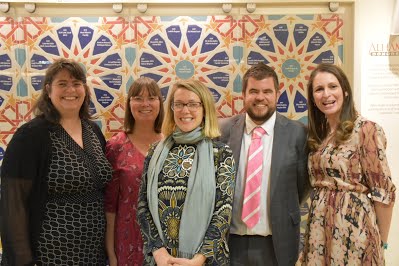
I am proud to be part of something that values subject knowledge, and is trying to improve it. The London RE Hub team 2016: 


The London RE Hub website will soon be updated with all resources from the 2016 Conference. Please get in touch via TheLondonREHub@gmail.com if you would be interested in helping run the 2017 Conference.

  • Hattie and Yates (2012) Visible Learning and The Science of How we Learn
  • Sutton Trust report into Great Teaching (2014)


Tuesday, 15 March 2016

#TFREConference 2016: Core Knowledge & RE


A grey and misty Saturday morning saw an early start in London for the second Teach First RE Conference, this one entitled REthinking the Curriculum. I was leading a session on Core Curriculum including the work of ED Hirsch and the possibilities it meant for RE.

I will be writing more extensively about this soon, but in the mean time, feel free to see my presentation:


Big thanks to Frances and Caroline for yet again organising such a great day in a wonderful location:


Tuesday, 27 January 2015

#BLOGSYNC: Knowledge vs Skills [RE]

Image courtesy of Pixabay

"What do you view as the relative roles of knowledge and skills in education?”

Some may be thinking, this again? While others will never have even considered their view, or approach, on the great "Knowledge vs Skills" debate. 

Tom Bennett hit the nail on the head for me in a recent RE:Online interview:


I want an RE that is less about ‘how do you feel about this?’ and more about ‘what have people thought and why, and what do you think of their beliefs?’ Before we can do the ‘why’, first we have to make sure the ‘what’ is secure. [See <here>]


This is absolutely crucial. I absolutely believe that until you have sound knowledge you can't meaningfully begin to master any skills. Perhaps this is distinct in RE, but I suspect not. I can't have my students passing judgement, analysing or drawing conclusions without sufficient information to make those activities meaningful. 

It is absolutely wrong to undertake endless activity-based lessons (as OFSTED seemed to want at one stage, and SLT in some places still demand). There needs to be considerable input of knowledge and this will not be the 'fun' or 'all singing and dancing' lessons many produce for observations. I've been guilty of this in the past, but there should also be a great joy in a lesson where students successfully absorb and learn significant new knowledge. 

I am forced, painfully, to recall an OFSTED observation on a Year 7 lesson. It was not Outstanding, only Good, because I defined the term 'Messiah' for my students. This was a new topic, and there was no prior knowledge of this concept. None of my students speak Hebrew, however the one piece of advice to have achieved a Grade 1 was to have allowed students to have discussed in pairs and 'work out for themselves' what 'Messiah' meant to them [Read more <here>].

Additionally, when considering this debate while recently marking A-Level essays, it was brutally clear that the best essays were the ones where students have learnt the material, they had knowledge. This allowed them in turn to display understanding in the Part A and then analyse and evaluate in Part B [Edexcel RS]. These skills are impossible for the students who simply haven't learnt the material.

Recently, I have introduced some cognitive psychology to student to help them appreciate the value and importance of learning key information. It really is the fundamental part to everything else. Any meaningful skill is based upon having sound existing knowledge, even the ability 'to Google' needs a sound knowledge base to assess the validity and usefulness of knowledge found.

However, not for one minute am I suggesting that we spend our whole time rote learning. This is not education, this is not how I teach. Yet, I do reject the idea in RE that 'you can't be wrong'; I frequently correct parents on this on open evenings. There are some things that are absolutely wrong, and even a limited amount of knowledge should allow you to reach that conclusion. 

This creates a need for teachers to plan their time carefully. You need to provide sufficient knowledge, but then allow adequate time for young minds to develop the necessary skills. You need a clear vision of what you want your students to achieve... and then work back. If I want my A-Level students to produce a clear conclusion on the usefulness of the Ontological Argument, I need to carefully work back to work out what core knowledge they need in order to reach that conclusion, then unleash their brains on it in a carefully structured way.

Blooms, SOLO and pretty much every other taxonomy of learning suggests that learning (and remembering) knowledge is core to any further progress. Students that have a vast bank of knowledge are often able to develop the necessary skills far quicker and more efficiently; this is no coincidence. Any activities, based on skills, must be deepening and widening knowledge. After all, the oft-quoted Dan Willingham tells us "memory is the residue of thought"; it is easier to remember when we have done some deep thinking about the subject.

Yet, is this really a debate in the first place? Just like 'Science vs Religion', it is perhaps misleading. There can be few, if any teachers, who would for a minute suggest that it needs to be one or the other in the most absolute sense. My lessons feature both: one day you would come in and see me drilling some key words, or dates, or scholars; on another we'd be doing a silent debate, speed dating or cracking on writing an essay! To do one without the other would be absurd; you'd have a pretty poor debate or essay with no knowledge, and there would be little point in simply learning knowledge to no end.

For me, there is a real joy in a well-crafted A-Level philosophy essay. It features clear understanding of the complexities of  the topic, careful analysis of scholars contributions before a confident conclusion showing the evaluative skills of the writer. Knowledge AND skills, totally inseparable in the final piece of work.


Read more on the 'Knowldge vs Skills' blogsync <here>