Monday, 9 May 2016

All The Small Things


"All the small things
True care, truth brings"
Blink 182

Blink 182 sum up their whole song in the first two lines. Their 1999 hit was written for guitarist Tom DeLonge's wife (as apparently she moaned about him always writing songs about other women!), and it clearly explains the importance of caring about others, and showing them how important they are. Sometimes the "smallest way" can make all the difference in the world to someone. In schools, it is often the small things, that make a big difference too.

Noticing the small things

Some people are solely preoccupied with their teaching. Perhaps they should be; that is our core purpose.

I've heard teachers say, "It is not my responsibility to check uniform." which is unhelpful from a whole school point of view. It's worth remembering that students rarely have too much loyalty and will frequently point out, "Mr X didn't say anything about my nose-stud". Brilliant.

I'd argue that it is the responsibility of all staff to notice the small things, and those who don't, should be challenged. 

Picking up on the small things

It is really hard work constantly picking up on the small things, and carrying them through.
  • What do you do when a student is 5 mins late, but your lesson isn't followed by break or lunch?
  • How do you record who hasn't got a pen or their exercise book, especially when you want to get the lesson started?
  • To what extent do you chase up uniform, especially if they don't have their uniform cards to sign?
  • When do you find the time to chase every piece of missing homework?
  • Do you challenge a student who has an extra earring in, hidden by her hair, if she is behaving well in your lesson (for once!)?
  • You ask a student to see you at lunch for 5mins over a minor issue. They don't turn up. What do you do?
I think, if you do pick up on these small things, you will only need to do it for a while. The greatest thing I had a student say to me was, "You're strict, but at least you are strict all the time... with everyone". However it really is hard work - it is a relentless and tiresome battle, and one that potentially starts again every September.

Yet many would suggest if we allow the small things to persist, unchallenged, then all of a sudden, sometimes without warning, the bigger things will follow. When things slip, and keep slipping, it can be really hard to turn around. This can happen on a small scale, in an individual classroom, or on a much larger scale, whole-school.

My recommendation, is to be organised and put in place systems anticipating the problems. Some staff write down everything in their planner or on SIMs (which is so handy if and when the issues escalate with the student). Schools need systems that are workable for teachers. Rules need to be as clear as possible, with sanctions easy enough to implement, and are followed through. Always. All the small things, true care, truth brings.

Image courtesy of Gigwise

Friday, 6 May 2016

WANTED: Catholic RE Teacher

The view from of our staffroom

We are looking a Catholic RE teacher with a deadline of Tuesday 17 May 2016 - please share this widely with any teachers you feel may be interested. We are a four-form entry, all-girls Catholic comprehensive school with a sixth form.

Here are three reasons that this could be the job for you:
  • The RE Department is small, friendly and supportive: KS3 is well-established and resourced (based on the Way, Truth and Life) and KS4 will be the new GCSE Edexcel Catholic Christianity spec. KS5 teaching involves General RE and A-Level (spec TBC). We are always looking at ways to improve our teaching and look forward to new ideas.
  • Upminster is a fantastic location: we are located just 22 minutes from central London by mainline train (we are also on the underground in Zone 6) or less than 5 minutes off the M25 Junction 29. There is lots to do within a short walk from the school.
  • There is potential for a Chaplaincy TLR. This is a role leading liturgy and the spiritual life of the school. Students enjoy this aspect of school life and are actively involved with chaplaincy activities around school. There are many things in place, but there is a great opportunity for making the role your own.
Read more here:
Read full job advert <here>
Download application forms <here>

If you would like to find out more, feel free to get in touch via <here> or on Twitter @iteachre


Image courtesy of Geograph

Tuesday, 3 May 2016

Teaching: A Vocation?


In many a staff room, blog or conversation with friends or family, a teacher has claimed, "but it's not just a job, it's a vocation". Recently while out with a friend, and fellow teacher, we discussed the fact that this claim may used as an excuse for poor working conditions (including workload) and expecting people to do things without getting paid for them - or even paying out of their own pocket for resources and CPD.

I like my job. This is much more than many people who simply tolerate their job, or indeed hate their job  There are some aspects that I love, and some moments of absolute joy. However, often I do finish the day frustrated, annoyed or feeling inadequate. Too often I don't feel I can get the job done within the constraints placed upon me.

Some of the key reasons for me going into teaching:
  • The skills I perceived that I had matched the demands of the job
  • The pay would give me reasonable standard of living - certainly better than many others in the UK
  • The holidays were a real bonus - especially with a family
  • My mum was happy as a teacher and many of my own teachers seemed happy and content with their jobs
However is this claim that my job is a vocation why I am sat at the table marking in an evening rather than playing with my son or watching TV with my wife? Does it legitimise the extra hours I put in before school and late at night? Is it why I give up my Saturdays and evenings for CPD and attending conferences without recompense? Do I buy things out my own pocket for school, and for my students, due to this? Am I reluctant to take a day off, even when ill, as a result?

There has been a sentimental rhetoric peddled by the government and their agencies; "no one forgets a good teacher" (Thanks TTA), and more recent TV adverts filled with smiling, energetic teachers and smiling, enthused students (Thanks DfE). Yet, my main memories from school are of the teachers where we messed around. I do also remember some things about the good teachers, but this is not reason alone to go into the job. Is it real romanticism to say teaching is 'a calling', in the way few other jobs are?

Of course, I do try my best to teach my students things (and help them remember this information), while being some kind of marker and guide through their turbulent years. Of course I will be there in their moment of need, pick them up, smile, help them out. However, I think teachers should also realise their limits, their remit, their actual job description. If you are trying to do everything you maybe could, for every student, or for every colleague, quite simply you won't last long. You will burn out. Your vocation could be short lived.

This is not to devalue our jobs; they are important to individuals, and to society. Collectively, we do change lives, we give our students qualifications enabling them to go on and achieve great things, earn a good income and have their own families. Maybe they will even remember our name somewhere down the line. 

Fundamentally I enjoy my job, far more than I think I'd enjoy many other jobs. The children I teach often make me laugh. I love sharing my subject specialism. I thrive from the energy in schools. It feels like a privilege to do this. I'm certainly not on the 'ready to quit' list. Yet I am not naive to say I never would be. In fact, I think the optimum would be 3 days teaching, 1 day doing something education related, but not teaching, and an extra day with my family - I think this would make me a really happy, productive and effective teacher. This would also force me to ditch any TLRs which are often disproportionately low payments for the extra workload.

We must continue to ask "why do people teach?" Don't kid yourself, for many it is a pragmatic and convenient choice. People get made redundant and want a career change, or they have had kids of their own and want something that means they can have holidays with their offspring.

For some it may be a true vocation, they may feel a true calling, but this is not the case for everyone. We certainly can't tell people it is a vocation to make them feel like they should, or could, be doing more. Teaching has been called the 'martyr profession', but just because some teachers like to lay bare their stigmata, it doesn't mean everyone should feel that they should, and it's okay to feel like you have no stigmata at all! 

If we stop labeling teaching as a vocation, could we improve the job in hand? People should be paid for what they put in, rewarded for going above and beyond, and have reduced workload demands so that they are not simply working out of the goodness of their heart (or fear of repercussions).

I'm just not entirely convinced teaching is a vocation in a true sense, and maybe, by doing so, we are contributing to the morale and recruitment crisis. Teaching is not simply being John Keating (Dead Poets Society) or Erin Gruwell (Freedom Writers) every day, and if we sell that as the dream it can only lead to disappointment. Maybe teaching is a vocation, yet because of this, teachers are not getting treated the way they should. If it simply means we get exploited as a result, I'd rather just have a job!


WARNING - this last bit is God related! I am an RE teacher in a Catholic school and vocation always features in discussion about why we teach, and why we work in faith schools. There is potentially a whole other blog to be written here...

How about teaching in a Catholic school, especially RE, surely that is a vocation?

Many do claim that there is a real vocation to working in faith schools. Perhaps staff make sacrifices, such slower promotion due to less opportunities if they want to stay in faith school system? However the dangers still remain, and potentially they are greater. I was once told of a church school where staff were reminded of the evangelical counsels (sometimes known as the counsels of perfection): chastity, poverty and obedience. This is a horrendous message to give to staff.

I do feel a vocation, to be a Christian. My job is a part of that, in as much as all things I do in life are. I try to evangelise through my word and deed, not just in the classroom, but always. I do not proselytise; I do not preach.


Image courtesy of Wikimedia

Tuesday, 26 April 2016

Teachers Love Learning Too


Should it come as a surprise that teachers love to learn? 

“Every teacher needs to improve, not because they are not good enough, but because they can be even better.” - Dylan William

It's clear by the way teachers sign themselves up for evening TeachMeets, weekend debates, Pedagoo events, ResearchEd, T&L Takeovers and Education Festivals that many of us care deeply about our jobs and are always keen to improve. I ran a Twitter poll that 120 teachers responded to: 43% had given up 1-3 Saturdays for CPD, 13% had given up 4-6 and 5% over 7. It does weigh heavily upon me that I have organised, and presented at events on so many Saturdays this year - should teachers really be doing this after a long working week? Shouldn't they be with their family and friends? 

Many of the above events focus on pedagogy or general teaching related ideas. When we began planning our first RE Hub conference in 2014, we wanted to do something different. We wanted to focus on subject knowledge and how to get it into the classroom. Saturday 16th April saw the second annual London RE Hub conference, an event that I am still recovering from and trying to contextualise.

RE teachers can be a strange breed, particularly as there are some real fundamental things we don't all agree on (approaches, the name of the subject, the place of spirituality, the definition of theology...). Our subject covers a board range of topics, and has been colonised by British Values, the Community Cohesion agenda, PHSE and SMSC. There is also the divide between schools with a religious character and community schools, now made more diverse by the academisation process.

I think that I first fully realised how much we as a community loved learning when I attended the 2nd Teach First conference and managed to sneak into John Moffat SJ's session on Grace. Here was a Catholic priest, giving an in-depth lecture on a difficult Christian theological concept. The room was in awe. How much of what John said could I take back to the classroom? I'm not sure; I even work in a Catholic school!

Reading the feedback from the London RE Hub conference, people loved the day as they got to learn. They heard experts explain their beliefs, answer questions on the core concepts of their faith, and ask some difficult questions. We went beyond GCSE level, sometimes beyond A-Level - while primary and secondary colleagues share the room. We tried to build in parts of the sessions where teachers tried to explain how to take these ideas back to the classroom, but in many cases the teachers simply wanted more input, more knowledge, more insight.

Hattie (2012) suggested that teacher knowledge did need to be secure, but that it shouldn't create an empathy gap between student and teacher. Yet we know it is something that students value... many students have said they believe I must be a good teacher as I have a Religious Studies degree from Cambridge; it makes them feel secure. Students want to know if their teacher is, quite simply, good enough. 

The Sutton Trust (2014) made clear (and is highlighted in an excellent RISE blog <here>):

“The most effective teachers have deep knowledge of the subjects they teach, and when teachers’ knowledge falls below a certain level it is a significant impediment to student;’ learning. As well as a strong understanding of the material being taught, teacher must also understand the ways students think about the content, be able to evaluate the thinking behind students’ own methods, and identify common misconception.”

RE teachers often recognise that they have these gaps, and want to fill them. In a subject where we are often struggling for subject specialists, and often see the subject being taught by non-specialists, even at examination level, this is a great concern for the RE community. 

Fighting for subject knowledge CPD is tough, and it will continue to get tougher. Schools are struggling with budgets, and as someone told me on Twitter, such study days are "self indulgent". I politely, and respectfully disagree. The fruits of the conference continue to grow, those who studied together on that today build networks of support and exchange. Despite my worries about 'stealing teachers Saturdays', I know I am willing to do it myself (and make up the time to my wife and young son!), and will continue to do so. The most humbling thing for me, was that teachers travelled from all over the UK to attend our day; thank you from the bottom of my heart.    

Some further questions:
How can we create opportunities for staff to develope their subject knowledge? (I love the idea of one INSET day being given over to subject study - for RE teachers, visiting places of worship etc)
How can we encourage a community of learning in schools alongside the current demands and stresses?
How can staff best share their learning with students if it doesn't quite fit the curriculum?

I am proud to be part of something that values subject knowledge, and is trying to improve it. The London RE Hub team 2016: 


The London RE Hub website will soon be updated with all resources from the 2016 Conference. Please get in touch via TheLondonREHub@gmail.com if you would be interested in helping run the 2017 Conference.

  • Hattie and Yates (2012) Visible Learning and The Science of How we Learn
  • Sutton Trust report into Great Teaching (2014)


Tuesday, 19 April 2016

"The Best That You Can Do" - Y11's Golden Mean


Jim Bianco is a US-based singer-songwriter who is sadly little known in the UK;  I'm a big fan. I had a YouTube playlist on as I did some marking, when on came, 'The Best You Can Do'. I am absolutely sure this song is not about taking GCSE exams, however I later found myself quoting the song lines in a meeting with a parent and student. 


Finding compromise with students can always be challenging. Many Y11 students still fall into the "You need to be working harder." category. Yet there is a surprisingly high number that fall into the "Please ease up on yourself and your workload.".

This would not be unusual for some of my year group:
  • Wake at: 6.30am
  • Study on bus: 7.30-8am
  • Study in school: 8-8.30am
  • Lessons: 9.05am-12.45pm
  • Revision Session: 1-1.45pm
  • Lessons: 1.50-3.30pm
  • Revision Session: 3.30-5pm
  • Study on bus: 5-5.30pm
  • Homework: 5.30-6.30pm
  • Revision: 7-11pm - or later. Some tell me they work until 1 or 2am.
Failure to do this, in their mind, is to not do what is required. As such, I have had to introduce a 'balance' list for some students for their current well-being. On it I suggest:
  • Have one lunch time per week with your friends
  • Go home at 3.30pm on one night a week
  • Don't discuss school / GCSEs / revision at the dinner table
  • Have one night during the week with no revision
  • Do 30mins of exercise at least 3 times a week
  • Go to bed at 10pm as often as you can
  • Put your phone in a different room for at least an hour a night
As for all humans, well-being often gets ignored in pursuit of some 'greater' goal - in this case GCSE exams. As I have pointed out, usually grades aren't gained or lost in the final two weeks of school; odd marks maybe. Grades are really achieved through two years of hard work, and for many of these students in danger of burning themselves out, they have done just this.

I have introduced The Philosopher (Aristotle) to some Y11s. The Golden Mean is the desirable middle-ground that falls between two extremes: the one of excess and the other of deficiency:

Courtesy of La Audacia de Aquiles

For Aristotle, the balance are seen as 'virtues', which are essential for achieving the ultimate goal, happiness. Sadly, Nicomachean Ethics never quite gets to the section on GCSE revision. If it did, what would it have said? What is our Golden Mean for final exam preparation? 

Returning to Jim Bianco, I think what I hope for, is that every single Y11 that arrives to pick up their results envelop in August can say, "I did my best". Whatever results have been achieved, no one can ask for any more. 

an uppercut a right
you punch with all your might
you hope they throw the fight 
before the bell stops ringing
your face is stinging, the crowd is singing
go out swinging...

do the best that you can do
and hope you make it through [lyrics]

Image courtesy of BMI


Sunday, 17 April 2016

A Great Week - Thank You!


The last week has been surreal. Great, humbling, but odd.

It began on Tuesday with the arrival of the proof of my textbook. This has been a labour of love over the last year. Dozens of Word documents that had become very untidy with edits, redrafts and amendments all of a sudden became a textbook. The designers have done an amazing job and it is something that I feel really proud to be have been involved in. Now I need to get reading, with my red pen, to really make it as good as it can possibly be. Read more about it <here>.


On Wednesday, I then got an email to say I was shortlisted in the TES Teacher blogger of the year. I was initially pleased enough that Andrew Old recommended me as potential nominee on his blog (see <here>), but to be shortlisted was a very pleasant surprise. There has been a lot of Twitter conversations about tickets, prices etc. I'm going to make an effort to go, as to be honest, I doubt I'll get invited again any time soon! See more <here>


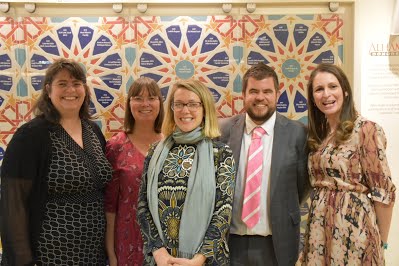
Saturday was then the second London RE Hub conference. Using the power of social media, we had an event attended by around 120 people. There was a great buzz in the hall of the London Muslim Centre / East London Mosque as we discussed key subject knowledge. I'm genuinely amazed that people would give up their Saturday, and some pay out of their own pocket, to come to an event I've organised! None of it would be possible without such a great team; huge thanks to [L to R] Claire, Deborah, Kate and Julia. We were still smiling at the end of the day:


While I was at the conference, post arrived, which I only opened on Sunday - my invite to Buckingham Palace! The CES nominated me for my work in Catholic education and I was put forward by the DfE too attend. Mobile phones need to be switched off, so no live tweeting the event or selfies with Liz!


I think as teachers, when recognition and praise comes your way, it can feel a little awkward.

I know I am not the greatest of teachers, although I'd hope that most of my lessons are informative and useful for my students. I know there are areas I still need to work on, and improve on. I also know my priorities have shifted somewhat since becoming a dad last October. I also know there are lots of teachers working at capacity who never get a word of thanks or recognition on a daily basis; that's not right.

I'd like to say a big thank you to all those who put faith in me or put me forward for these things; it means more than you could ever imagine - teachers thrive on praise just as much as students do! Thank you.


Thursday, 14 April 2016

#TMLondon - The Aftermath


It is a great privilege for me to be involved in #TMLondon. For the second time, I have been working behind the scenes organising sponsorship, goodies and prizes for the evening. On the day, I was largely running around setting up and checking the competitions and managing the Twitter account. The only downside is that I don't get to hear all the speakers, nor say hello to everyone! 

However, to be part of such an exciting and dynamic event that provides really genuine and authentic CPD for those who attended is a really great thing. I'd like to thank Ross for the opportunity. Here are a few ways to find out what happened:
On to the exciting stuff...

WINNER!

Jonathan Peel was our winner of the M&S hamper courtesy of edukit. Read his blog <here>
There were lots of great blogs on Staffrm, read them all <here> - The Staffrm team picked their best blog which belonged to Jaz Ampaw-Farr, read it <here>


EduKit is a social enterprise part funded by the DfE putting people before profit, we want to help all schools find the relevant support for their students, we have built a FREE online platform that can connect schools to external organisations that offer student programmes to help with all types of issues your students may face. We have over 800 organisations registered and more joining everyday! 30% of our programmes are FREE. It is completely FREE to register and use and all staff are welcome! Feel free to sign up and have a look https://www.edukit.org.uk/register/

---------------------------------------------------------------------------------------

NEW BLOG COMPETITION

ClassCharts have offered to pay for dinner for two! This will be at a restaurant of your choice. In order to win this, you need to write a blog about #TMLondon - What Happened Next? You could blog about an idea that you used in your classroom, or an idea you share with collegaues. Have you been inspired to run your own TeachMeet, or have you made a new network connection. The deadline for this is Thursday 21st April 2016. The #TMLondon team will pick a winner. Please email all entries to TeachMeetLondon@gmail.com 


Seating plans in seconds & super fast behaviour management

Gorgeous seating plans for SIMS, etc.
Important information at your fingertips
Super fast behaviour management
Unusually powerful analytics


---------------------------------------------------------------------------------------

FREE TRIAL FOR ALL #TMLONDON ATTENDEES! 


We enable teachers to use the moving image and sound to facilitate teaching and learning. Our online service, Box of Broadcasts provides access to over 2 million broadcast TV and radio programmes and we would like to offer free trials for a month to every school attending Teachmeet London next week. To request a trial, teachers just need to email their name, school name, a start date for the trial and a contact email address to: BoB@bufvc.ac.uk. The subject header in the email should read, "Free trial of BoB." There is no obligation to subscribe. In case teachers wish to know the annual rates should they decide to subscribe, they are: £600 + VAT (Special and Primary Schools) £1200 + VAT (Secondary Schools)